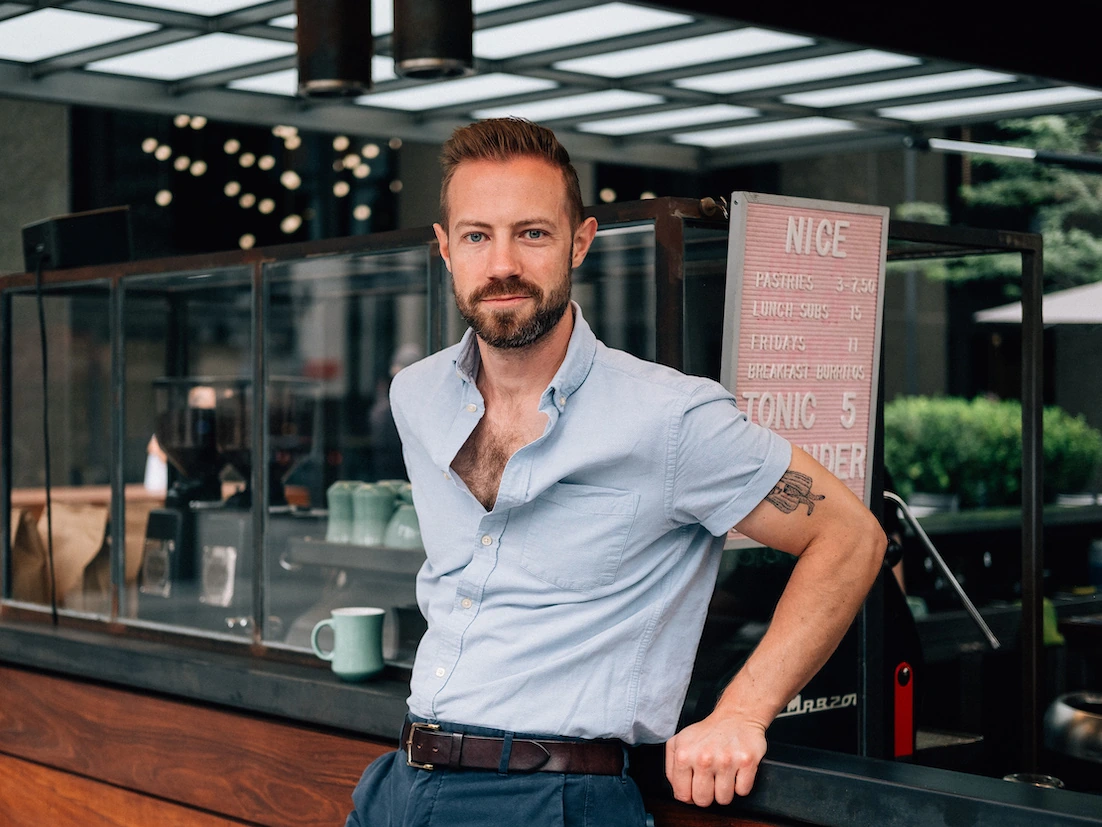
The Nice Coffee counter at 515 Flower St, Suite 1960, meets downtown Los Angeles without a dining room: a Gensler-designed walk-up outdoor bar built for financial district regulars, office breaks, and quick handoffs from the sidewalk. Elliott Lau of Nice Coffee bought the DTLA shop in January 2020, kept staff on through the pandemic period, brought in roaster Doug Meils in 2023, and helped launch Nice Coffee Roasters and e-commerce in 2024 (Daily Coffee News).
Lau had worked at Nice Coffee for more than three years before he purchased it. Then offices emptied across downtown Los Angeles. The customer base around the financial district changed by the week. For a new owner, keeping a small coffee business alive became the operating question when the neighborhood it served stopped moving at its usual pace.
He names hospitality, care for regulars, care for co-workers, less waste in packaging and shipping, and a better quality of life across the coffee industry. In 2023, he brought in coffee roaster Doug Meils and offered him co-ownership. In 2024, Nice Coffee launched a roastery and e-commerce operation.
Elliott Lau’s Nice Coffee Story Begins in January 2020
He bought Nice Coffee after more than three years behind and around that DTLA bar. The shop itself had been rooted in Los Angeles and serving downtown financial district workers since 2017, first under founder Tyler Wells, another Handsome Coffee Roasters alum (Nicecoffeeroasters).
Lau joined Nice Coffee in 2017. By the time he took ownership in 2020, he had already lived through several versions of Los Angeles coffee: the energy of high-volume espresso bars, the precise service language of third wave cafes, and the daily labor of keeping a regular’s drink consistent when the line is moving (Daily Coffee News).
He kept his staff on even as downtown offices sat vacant. Nice Coffee’s geography is part of its business model. A walk-up outdoor cafe in the financial district depends on pedestrian rhythm: office arrivals, short breaks, repeat orders, names remembered across the counter. When that rhythm breaks, hospitality becomes logistics, payroll, weather, morale, and patience.
"I took over Nice Coffee in 2020, and I was too scared to go home and visit during the pandemic. I didn’t want to be the grandchild who killed their grandparents with COVID."Sprudge
Elliot Lau, owner of Nice Coffee
He stayed in Los Angeles, kept the business moving, and held the staff together through a downtown disruption that cut directly into the shop’s daily pattern.
From Richmond to Los Angeles, the Bar Came First
Lau says he has worked in coffee for seventeen years. His first coffee job was at Globehopper Coffee and Lounge in Richmond, Virginia, a now-closed Counter Culture Coffee account.
On a cross-country drive, he stopped in Chicago and visited Intelligentsia’s Broadway location. The shop was serving a Kenyan micro-lot on a Clover before Starbucks acquired the brewer. Lau remembered plum flavors, a bag that cost forty 2010 dollars, and the surprise that the same coffee still held up when he brewed it later on a Mr. Coffee in Virginia.
Lau remembered plum flavors, a bag that cost forty 2010 dollars, and the same coffee holding up later on a Mr. Coffee in Virginia. That memory also set up his later suspicion of waste. If a coffee can carry itself across brew methods, then every added layer around it, every heavier product, every extra leg in the supply chain, has to justify the work it creates.
He moved to Los Angeles in 2008 to pursue an entertainment career, then became a well-known face in the city’s third wave coffee culture. He worked in restaurants and cafes, pulled shots at Verve, Blue Bottle, and Stumptown, and became especially recognizable from his time as lead barista and manager at Handsome Coffee Roasters in the Arts District of downtown Los Angeles.
Handsome, Verve, Blue Bottle, Stumptown, Then Nice
Handsome Coffee Roasters was a key credential in Lau’s Los Angeles arc because it tied service, roasting, espresso preparation, and bar culture into one public-facing room. That role put him in the position every serious cafe eventually depends on: the person who translates a roasting program into a guest experience while keeping the bar moving.
His later work at Verve, Blue Bottle, and Stumptown gave him contact with different systems for quality control, training, hospitality, and scale. Each has shaped how American specialty coffee talks about extraction, sourcing, design, and service. Lau’s path through those bars gave him fluency before he bought a shop of his own.
For Nice Coffee, that background matters because the shop is physically exposed. A walk-up outdoor experience has the counter, the drink, the greeting, the handoff, the weather, and the next guest. There is the counter, the drink, the greeting, the handoff, the weather, and the next guest. The barista has to create continuity in a small window of time. Lau talks about regulars and co-workers.
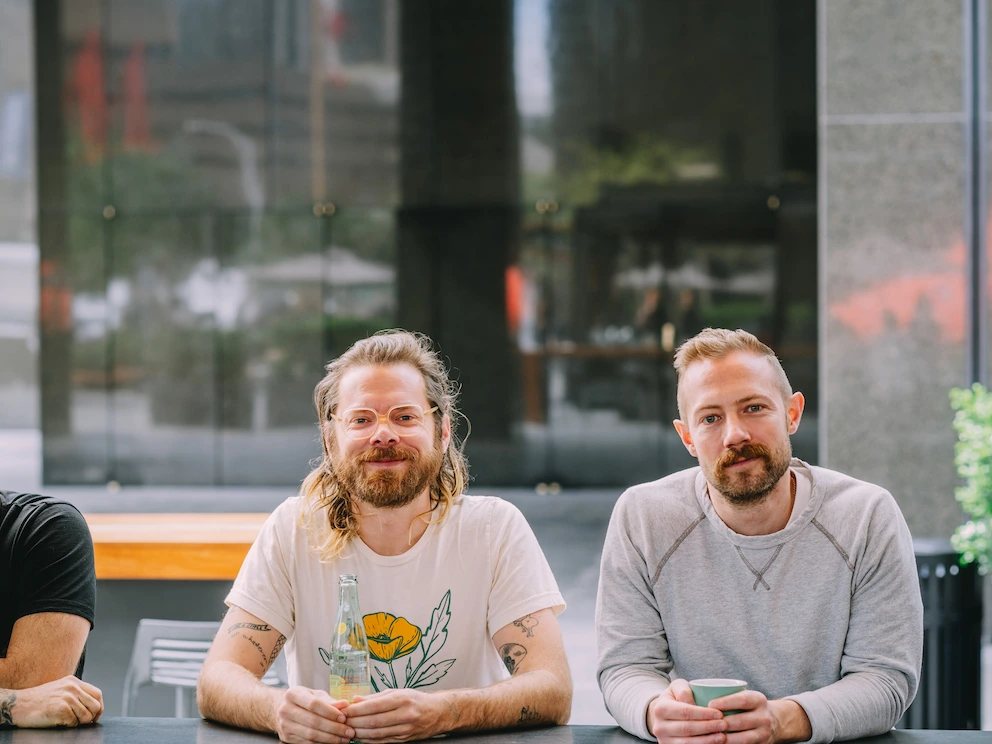
Lau is the owner of Nice Coffee and co-founder of Nice Coffee Roasters with Doug Meils. A good bar needs coffee it understands. A roastery needs a counter where feedback arrives in real time, through drinks returned, drinks praised, drinks reordered, and regulars who notice latte art.
Doug Meils and the Single-Roaster Turn
The following year, Nice Coffee launched a roastery and e-commerce operation. Those two moves gave the downtown cafe its own roasting identity and a digital channel beyond the sidewalk counter.
Lau has explained the impulse through his own formation as a barista. He grew up in single-roaster shops and wanted to give guests and staff that same experience. In practice, a single-roaster model can tighten the loop between green coffee decisions, roast development, dialing in, staff training, and customer conversation. The bar does not have to translate a rotating set of outside roast styles every week. The roasting side gets immediate feedback from the espresso machine and the cup.
The roastery did not arrive as a detached production arm. The roastery came after years of bar work, the pandemic period, and the decision to bring Meils into the project. The cafe gives the roasting side a daily read on what guests order, what the staff can explain cleanly, and what earns a second cup from a downtown regular who has only a few minutes before returning to work.
Nice Coffee Roasters also marked its first birthday with a party and amateur latte art competition on August 8th, 2024. Nice Coffee Roasters marked its first birthday with a party and amateur latte art competition on August 8th, 2024 (Nicecoffeeroasters).
The e-commerce piece widens access. Nice Coffee Roasters offers a Locals Only subscription that includes a $15 gift card to spend at the cafe every month. That structure pulls online purchasing back toward the Flower Street counter. It rewards the person who still comes by, talks to the staff, and spends part of the subscription inside the neighborhood business.
Hospitality, Sustainability, and Quality of Life
Lau’s Sprudge Twenty answers keep returning to the human cost of coffee work. He says the industry should use less packaging and less shipping. He connects heavier products, extra supply-chain legs, and packaging choices to climate impact. His critique is specific enough to cut through the usual sustainability fog: weight matters, waste matters, distance matters.
He also points to shrinkflation in coffee, recalling the shift from 16-ounce to 12-ounce retail bags more than ten years ago and raising concern about 10-ounce bags and 10-ounce drinks. He is frustrated about teaching people the value of the product. He argues that reducing sizes instead of teaching people the value of the product can increase waste.
Coffee is expensive to source, roast, package, ship, and serve, while baristas need wages and schedules that make the job livable, and small businesses need margins that keep the doors open. Lau’s version of coffee happiness is an industry that intentionally raises the quality of life for everyone involved.
"Be curious, be honest, be kind, and pay attention to your co-workers and regulars. We’ve got to take care of each other these days and a healthy dose of empathy goes a long way."Sprudge
Elliot Lau, owner of Nice Coffee
Curiosity helps a barista keep learning. Honesty keeps quality control grounded. Kindness keeps a bar from turning brittle under rush pressure. Attention to co-workers and regulars is part of service.
What Nice Coffee Means for Downtown Los Angeles
Downtown Los Angeles puts cafes in the flow of office life. Nice Coffee serves working professionals in the financial district, and its walk-up format puts it in the flow of office life: arrivals, meetings, short breaks, and the second cup that has to land fast. The counter is the room.
A cafe built around downtown foot traffic had to navigate the pandemic period when offices were vacant. Lau kept staff on. Later, he brought Meils into the business and built toward roasting. The path gave the neighborhood cafe another layer of craft to work from.
Lau’s own early revelation centered on a brewed Kenyan coffee that carried its fruit character even through a simple home machine.
Elliott Lau owns a walk-up counter on Flower Street, built a roastery with Doug Meils, offers a local subscription that sends people back to the cafe, and argues that coffee work should leave less waste and support a better life for the people inside it.