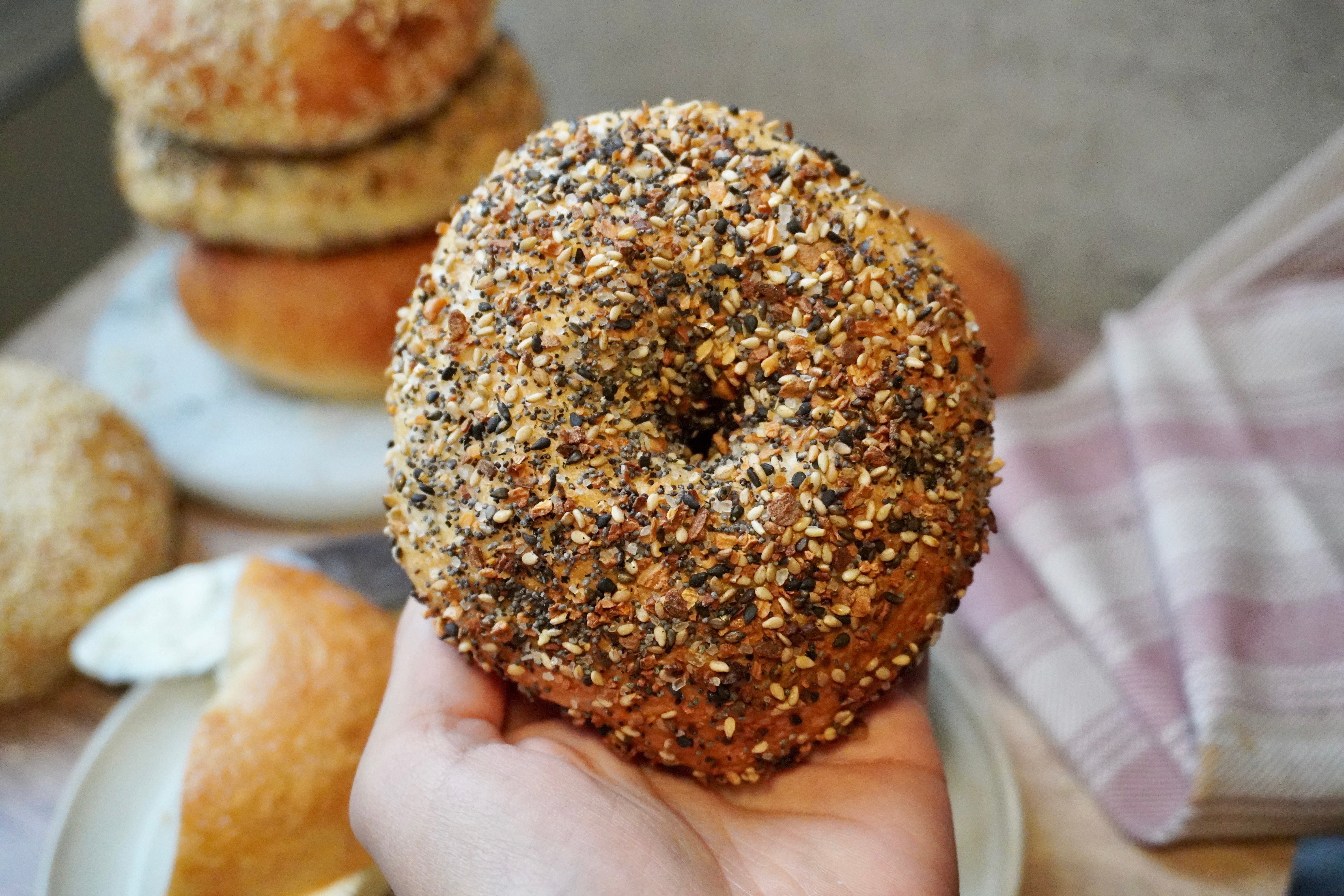
The first public batch at 81 Fifth Avenue comes out of a dough schedule built around the starter James Caputo remembers from his father’s bakery work, a culture at least 45 years old and now headed for a new bagel counter in Park Slope. Caputo Bagels Park Slope opens Monday, October 5, with fifth-generation baker James Caputo and restaurateur Rafael “Rafi” Hasid behind the shop (Parkslopepulse).
Park Slope gets a bagel shop that starts with a two-day sourdough process, not a quick morning mix. Caputo’s crew works in small batches, rolls by hand, gives the dough an overnight cold fermentation, then shapes, boils, and bakes at 400 degrees. The goal is a quiet sourdough note, enough to register under scallion cream cheese, za’atar, harissa, egg, cheddar, or the shop’s signature Lard Provolone Bagel.
Caputo brings a family line that reaches back to 1904, when Giovanni Caputo opened the family bakery business in South Brooklyn. Hasid brings the restaurant floor, through 6R Hospitality Group and ownership of Miriam and 1803 NYC. The two have known each other for more than two decades; the relationship began when Hasid bought bread from Caputo’s for Hill Diner on Court Street (Patch).
What Sets Caputo Bagels Park Slope Apart
The key detail at Caputo Bagels Park Slope is fermentation time. Each batch takes about two days, including an overnight cold fermentation, before the dough is shaped, boiled, and baked. That timeline matters because it gives the bagel time to build flavor without letting sourdough take over the bite.
The shop calls the sourdough flavor subtle. That word does work here because the bagel still has to hold the counter. It has to take cream cheese. It has to carry egg, bacon or sausage, and cheddar. It has to let sesame or everything seasoning land before the crumb comes forward. A sourdough bagel that crowds the toppings has lost the plot. Caputo and Hasid built this recipe around their own preferences rather than a straight copy of a standard New York bagel.
The finished bagels are described with a golden crust, a crisp exterior, and a chewy interior. Those are the parts to read closely on opening day. A crisp exterior tells you the boil and bake are doing their work. A chewy interior tells you the dough has enough structure to resist without turning tough. The sourdough has to sit under both, present but not loud.
Caputo Bagels will also serve sandwiches, pastries, and coffee, but the opening argument starts with the bagel itself. Plain, Sesame, and Everything bagels are priced at $2.50 each, with half-dozens at $14 and dozens at $26. Those numbers keep the basic order within reach for neighbors trying the shop once and for regulars testing whether a dozen belongs on the kitchen table.
The Starter James Caputo Carries Into the Dough
James Caputo is a fifth-generation baker, and the starter behind the bagels connects this new Park Slope counter to the family bakery work that came before it. Caputo remembers his father using the starter when James was a child, which makes it at least 45 years old. In a bakery, that kind of continuity lives in feeding schedules, temperature judgment, and the way dough feels under the hand (Parkslopepulse).
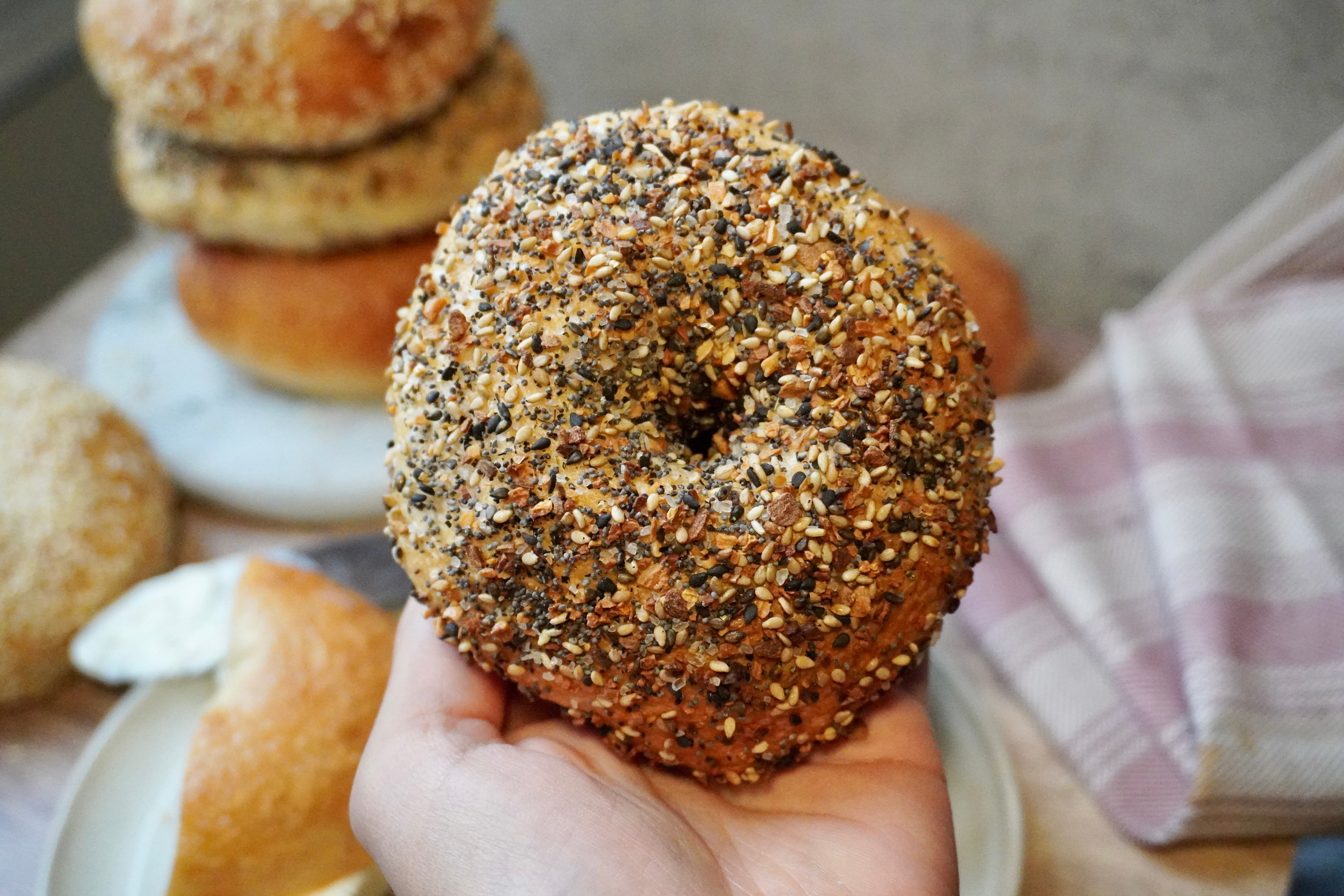
The Caputo family bakery dates to 1904, when Giovanni Caputo opened the business in South Brooklyn. Caputo’s Bake Shop became known for handmade breads, Italian pastries, and lard bread. The new shop carries that history through dough, fermentation, and the Lard Provolone Bagel, which takes its cue from the family’s lard bread.
The Lard Provolone Bagel is priced at $4 and includes salami, provolone, salt, and pepper. Order it because it is the clearest bridge between the old bakery bench and the new bagel tray. It gives Caputo’s lard bread lineage a bagel shape, with fat, cheese, and seasoning folded into a format that works for a Park Slope counter.
The starter also changes how to read the plain bagel. Plain is often the least protected order. There is no sesame cover, no everything mix, no scallion cream cheese to hide behind unless you add it. At Caputo Bagels, plain should be the first diagnostic bite: crust, chew, sourdough level, salt, and finish. If the plain works, the rest of the case has a foundation.
Two Days, Hand-Rolled, Boiled, Baked at 400 Degrees
The process at Caputo Bagels has four fixed points: about two days of preparation, overnight cold fermentation, hand shaping, and a boil before a 400-degree bake. For a bagel regular, those steps are the story. The dough is not treated as a blank carrier for toppings. It has a schedule.
Cold fermentation slows the work and gives the dough time before heat sets the final structure. The flavor comes from the starter, the clock, and the handling, not a topping trick or a seasonal spread. Hand-rolling also matters because it puts the baker into the shape, one piece at a time. A machine can repeat; a baker can feel tension in the dough and adjust.
The boil is the hinge between dough and bagel. After fermentation and shaping, the water step sets the exterior before the oven finishes it. Then the 400-degree bake has to bring color without drying the interior. The shop’s promised result is a golden crust with a crisp exterior and chewy interior, the pressure point for any bagel worth buying by the dozen.
This is where small-batch production gets practical. If the shop is rolling by hand and taking about two days per batch, the rhythm of production will shape the counter. A customer buying one bagel is still entering that schedule. A customer buying a dozen is buying two days of work in a paper bag.
Rafi Hasid Brings the Restaurant Floor to Fifth Avenue
Rafael “Rafi” Hasid is the founder of 6R Hospitality Group and owner of Miriam and 1803 NYC. At Caputo Bagels, his role matters because the shop has to run beyond the bake case. It will offer about 25 seats for dine-in customers along with grab-and-go service, which means the counter has to move two kinds of morning traffic at once.
Hasid and Caputo have been friends for more than 20 years. Their working relationship began when Hasid bought bread from Caputo’s for Hill Diner on Court Street, then grew into the partnership behind this shop. That history gives the opening a practical shape: the baker who knows the dough and the restaurateur who knows the room.
The 25-seat detail is small but useful. Park Slope customers can treat Caputo Bagels as a stop for a dozen, a single sandwich, or a sit-down breakfast, but the room will not absorb an endless line. The grab-and-go side will matter from the first week. So will the counter staff’s ability to move cream cheese orders, breakfast sandwiches, pastries, and coffee without losing the bagel as the center of the shop.
Miriam has already made Hasid a known neighborhood operator. Caputo brings the family baking name. The partnership gives Caputo Bagels Park Slope a two-part identity from the start: old bakery muscle and restaurant service experience, compressed into a Fifth Avenue storefront.
What to Order on Opening Day
Start with two bagels. Order a Plain Bagel first, because it shows the starter, crust, and chew without cover. Then order the Lard Provolone Bagel, because it points back to Caputo’s lard bread and gives the new shop its most specific signature. At $4, it is the order that says most clearly why this baker is opening this bagel shop.
If you are buying for a table, the pricing is straightforward: Plain, Sesame, and Everything are $2.50 each, half-dozens are $14, and dozens are $26. The dozen is the right move if you want to compare plain against seeded bagels at home, or if you want to see how the crust and chew hold after the ride back from Fifth Avenue.
Cream cheese options include Scallion, Za’atar, Olive, Harissa, and Tofu. Za’atar and harissa point toward Hasid’s restaurant background without turning the menu into a long list of distractions. For a first order, keep the spread simple enough to read the dough. Scallion on sesame gives you a familiar frame. Za’atar on plain lets the sourdough stay visible.
The open-faced sandwich menu will include breakfast sandwiches with eggs, bacon or sausage, and cheddar. The pastry side will include croissants, cinnamon raisin rolls, banana bread, and orange cake. Those are useful second visits. Opening day belongs to the bagels.
The Park Slope Address and the First Queue
Caputo Bagels opens at 81 Fifth Avenue in Park Slope, Brooklyn, on Monday, October 5. The address matters because Fifth Avenue already works as a daily errand route for the neighborhood, a street where a bagel shop can become a habit quickly if the counter delivers. This one arrives with a family starter, a fifth-generation baker, and a restaurateur who knows the local dining map.
For travelers who plan mornings around bakeries, Caputo Bagels Park Slope has three clear reasons to go early in its run. The first is the 45-year-old starter. The second is the two-day production cycle with overnight cold fermentation. The third is the Lard Provolone Bagel, a $4 item tied directly to the bread that made the Caputo name familiar to Brooklyn bakery customers.
The practical move is simple: show up on October 5 at 81 Fifth Avenue, order a plain bagel before dressing anything up, then add the Lard Provolone Bagel if you want the family-bakery thread in one bite. If you want a seat, remember the room has about 25 of them. If you want to test the counter at home, buy the dozen and let the plain, sesame, and everything bagels do the talking.
Watch how the starter behaves once the shop moves from opening announcement to daily production. A bagel shop earns its place by repeating the bake, batch after batch, with the same crust, chew, and timing that brought the first line to the door.