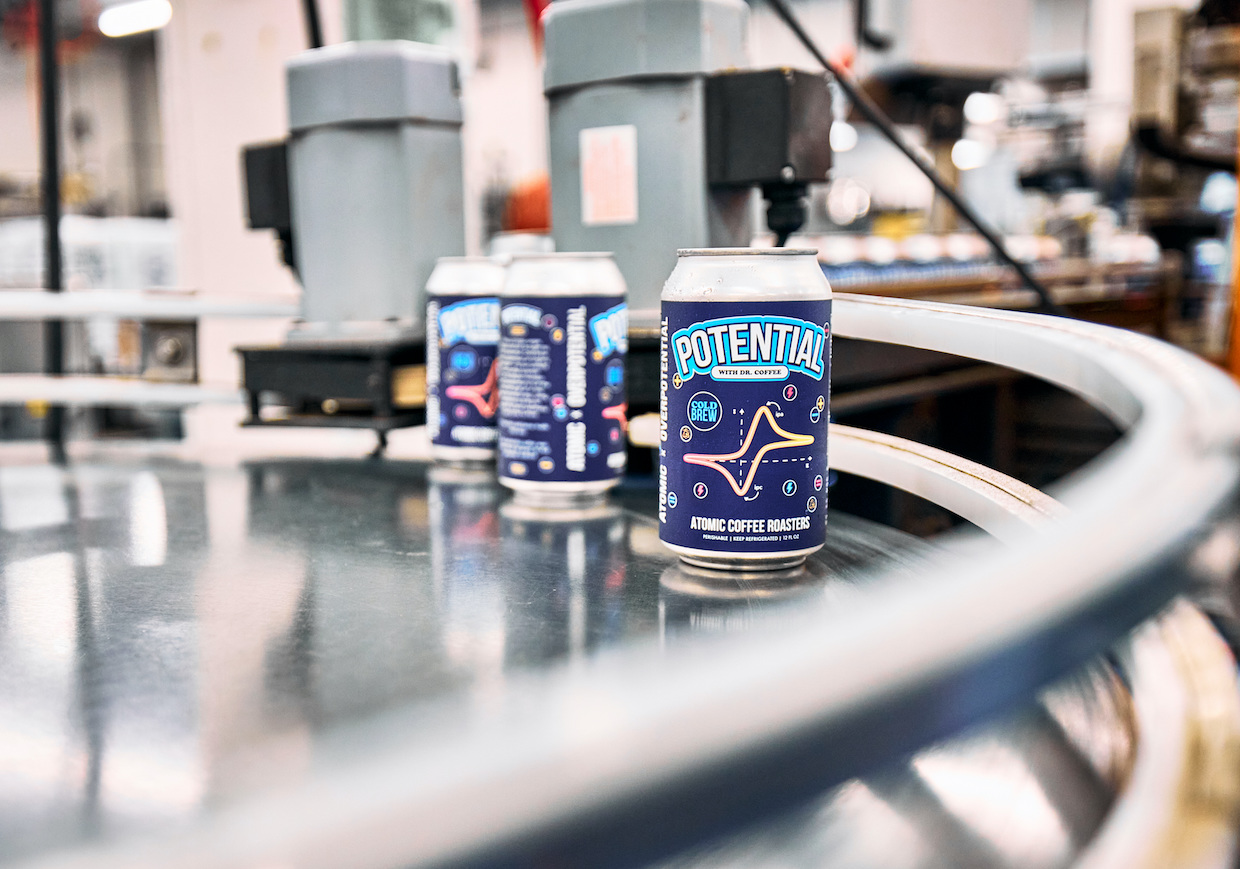
At Atomic Coffee Roasters' cold-brew facility in Danvers, Massachusetts, the new step sits between the storage tank and the canning line: electrodes installed in a section of pipe, waiting for brewed coffee to pass through. The Atomic Coffee Overpotential partnership is launching Potential, a cold brew treated with low-voltage electrical current to alter flavor compounds in the finished liquid. The first release uses a natural-process coffee from Gera Estate in Ethiopia's Djimma region, and the number for early buyers is plain: $48 for a 12-pack.
That setup matters because Atomic is not changing the coffee by adding a syrup, adjunct, or post-brew flavoring. Atomic produces the coffee with its standard cold-brew method, then routes the liquid through a process designed by Overpotential. The treatment applies low-voltage electrical currents to the cold brew, with voltage and flow rate adjusted for the sensory target. It is a coffee story, but it starts in the pipe.
How Electrochemical Treatment Changes Coffee Flavor
Cold brew has always been a trade. It gives drinkers a chilled, shelf-ready format, but the format can blunt the edges that make a single-origin coffee worth following in the first place. Spencer Mahoney, President of Atomic Coffee Roasters, framed the problem around coffees the roasting team values but does not usually put into cans. Some single origins carry fruit, florals, and origin character that cold extraction can flatten before the drinker ever cracks the tab.
For the first Potential release, Atomic chose a natural-process coffee from Gera Estate in Ethiopia's Djimma region, a coffee Atomic has sourced for several years. Mahoney's description stays close to the reason for the choice: "It has the berry notes you'd expect from an Ethiopia natural, plus mango and a floral note that carries through, and those are exactly the things cold brew usually flattens."1
That is the order here: Potential, from Atomic Coffee Roasters, made with Gera Estate coffee. The point is not novelty for its own sake. It is whether a can of cold brew can carry the fruit and floral detail Atomic associates with this Ethiopian coffee after the brew has already gone through the constraints of cold extraction, storage, and packaging.
The word Potential also does some work. Atomic is treating this as a way to widen what kinds of coffees can make sense in cold brew, not just as a new can design. Mahoney has said the electrochemical treatment opens more flavor possibilities among existing coffees and cold brew formulations. For people who follow single-origin menus, that is the useful part. The question is not only how the first can tastes, but whether coffees that usually stay on the hot bar can move into ready-to-drink form without losing their reason for being there.
The Science Behind Overpotential's Process
Overpotential was co-founded in Cambridge, Massachusetts, in 2025 by Christopher Hendon, a University of Oregon Associate Professor of Chemistry, and UO researcher Doran Pennington. Both have conducted coffee-focused electrochemistry research. With Potential, their work moves into Atomic's production flow in Danvers.
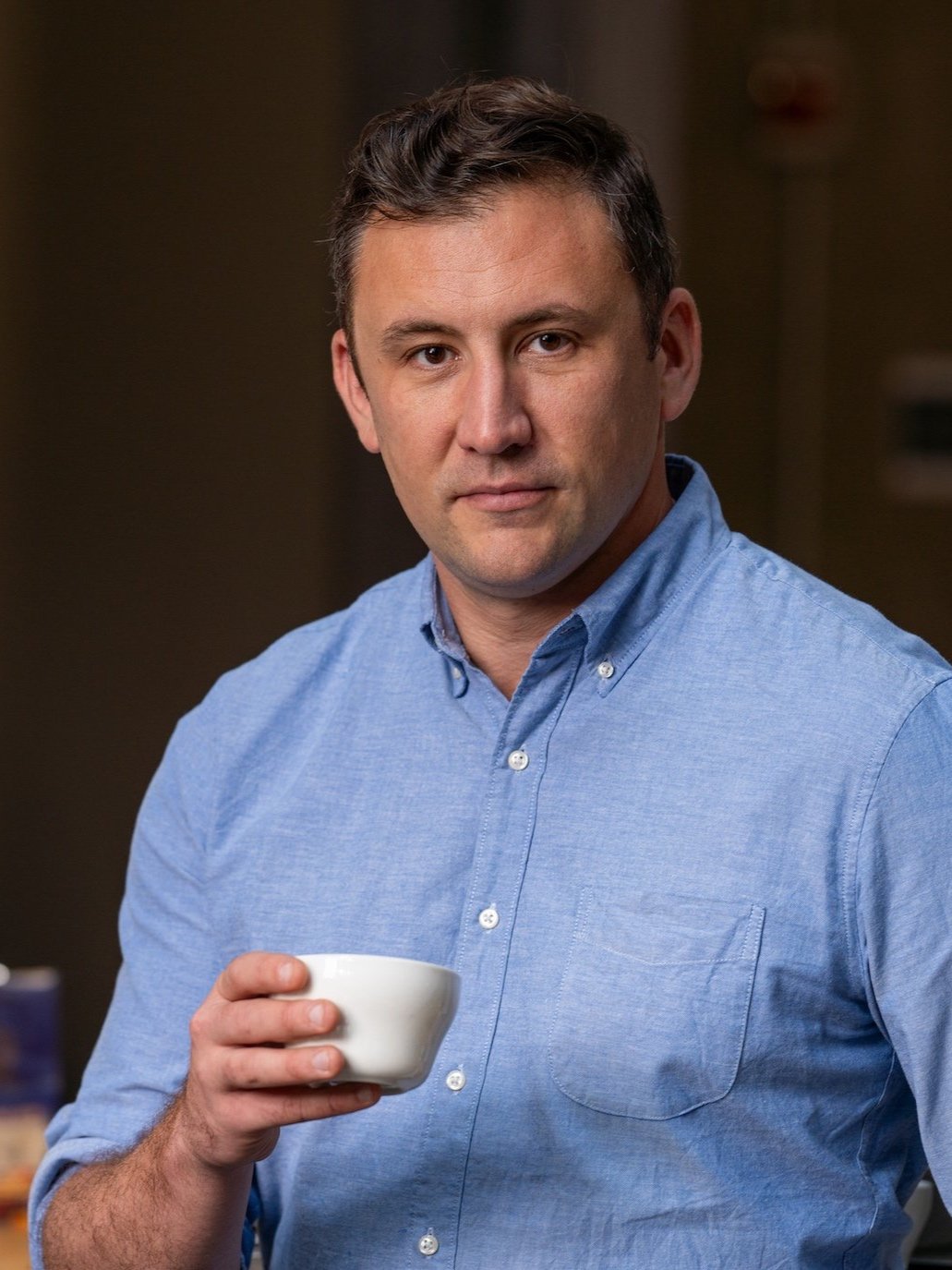
The process is physical and chemical, not theatrical. Electrodes are installed in a section of pipe between a storage tank and the canning line. As the cold brew moves through that section, the system applies a low-voltage electrical current. Voltage and flow rate change the result. More intensive treatment comes through additional passes rather than higher voltage, with treatment levels generally comparable to household batteries.
Hendon describes the target in terms of molecules already present in brewed coffee: "We select electrode materials that are food safe, and deliberately target the conversion of organic molecules that have oxidized during brewing"2. That sentence is the technical hinge. Overpotential is not trying to make coffee taste like something else by addition. The company applies electrochemistry to consumable liquids with the goal of modifying flavor without adding ingredients.
The production details also explain why this is not a push-button flavor switch. Hendon has said every coffee is different and every day is variable, so the team has to adapt to the chemistry present in each extract. Settings are refined through chemical measurements and sensory evaluation. In cafe terms, this is closer to dialing in than to copying a recipe. The numbers matter, but the cup still decides where the setting stops.
What Makes Atomic Coffee Overpotential Cold Brew Different
The Atomic Coffee Overpotential cold brew project starts with a familiar base: Atomic's standard cold-brew method. The difference comes after extraction, when the liquid passes through Overpotential's treatment before canning. That placement matters. The coffee has already been brewed; the current is acting on the liquid as a finished extract on its way into package.
Potential also marks Overpotential's first commercial coffee collaboration, the companies have said. That gives the release a different weight for coffee obsessives than another seasonal can. It is the first public test of whether Overpotential's research-driven process can survive the ordinary pressures of a production line: repeatability, batch variation, packaging, and drinkers who do not care how hard the chemistry was if the can tastes flat.
Atomic's role keeps the project anchored in coffee rather than laboratory language. The company chose the coffee, produced the cold brew, and will have its name on the can. Mahoney is the person tying the technology back to a practical cold-brew problem: why limited single origins often do not make it into ready-to-drink production. Hendon and Pennington bring the electrochemistry. The pipe between the storage tank and the canning line is where those two kinds of work meet.
For the drinker, the comparison is not hot coffee against cold brew. It is conventional cold brew against a treated cold brew made from the same kind of origin material Atomic would otherwise protect from the canning line. Potential asks whether an Ethiopian natural can keep enough berry, mango, and floral character in a chilled format to justify the exercise.
Where Potential Starts, Danvers and a $48 12-Pack
Potential is produced at Atomic Coffee Roasters' cold-brew facility in Danvers, Massachusetts. A 12-pack of Potential will sell for $48. That puts the first buying decision in simple terms: order the Gera Estate release if you want to taste the first commercial coffee collaboration from Overpotential and Atomic's first electrochemically treated cold brew.
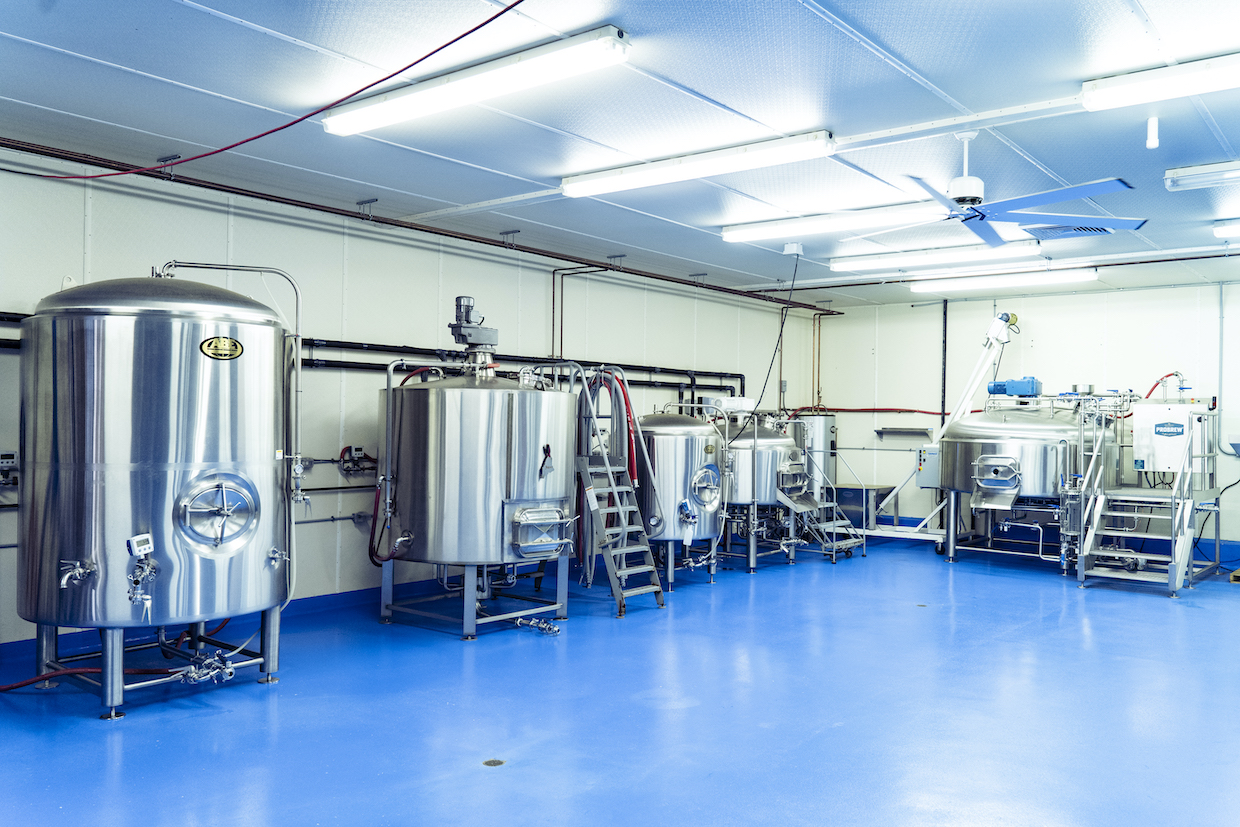
A public sell-out hour, stockist list, and pickup schedule have not been announced in the available launch details. For now, the practical detail to hold is the 12-pack price and the production location. The Danvers facility is not a decorative detail. This is where the cold brew moves from tank to treatment to can.
The Massachusetts angle also keeps the launch close to a working regional coffee scene rather than a trade-show prototype. Atomic is a Massachusetts-based roasting company. Overpotential began in Cambridge. Potential is made in Danvers. The project moves across the same state from research formation to cold-brew production, then into cans that coffee drinkers can evaluate without needing a lab bench or cupping form.
What to order is the first Potential release, made with natural-process Gera Estate coffee from Ethiopia's Djimma region. Why that one: Atomic chose it to test whether the treatment can carry the fruit and floral notes Mahoney says cold brew usually flattens. If you buy the 12-pack, taste one can cold from the fridge, then give another a few minutes in the glass. Temperature can change what a chilled coffee gives you, and this release is built around whether those lifted notes survive the format.
Why This Launch Matters for Specialty Coffee
Specialty coffee has spent years refining extraction on the front end: grind size, water chemistry, brew ratio, contact time, temperature, pressure. Potential shifts attention to what can happen after cold brew has already been made. That is a different lever. It treats the finished liquid as something still adjustable before packaging.
The risk is clear enough. Coffee drinkers can be ruthless with technology that talks louder than the cup. If the treatment buries the coffee, the process becomes the headline and the drink becomes a footnote. If the treatment preserves more of the Gera Estate character in the can, Atomic and Overpotential will have given roasters another way to think about cold brew coffees that usually stay out of ready-to-drink production.
The next thing to watch is not a slogan. It is the coffee selection. Gera Estate gives Potential a first test with a natural-process Ethiopian coffee carrying berry, mango, and floral notes in Mahoney's description. If Atomic uses the same treatment on other coffees, each choice will say more about where the process helps, where it does not, and which origin traits survive the can.
For now, Potential belongs in the same mental folder as a new grinder setting or a changed water recipe, except the adjustment happens after brewing and inside a production line. The first cans out of Danvers will tell drinkers more than the diagram can. Watch the coffee Atomic chooses next, because the second release may say even more than the first.