Fukuoka City, also known as Hakata, already had coffee bones before specialty coffee arrived with competition scores and roast software. Its kissaten culture gave the city siphon, Nel drip, deep roasts, and regulars who knew the taste of a house cup. Coffee Bimi, founded in 1977 by Muneo Morimitsu, marked an early in-house roasting standard in a city where coffee had often been treated as cheap commodity fuel (Sprudge).
Fukuoka Coffee Guide Starting Points
Naoki Gotō of Tokado Coffee won the 2013 World Coffee Roasting Championship. Hidenori Izaki, born in Fukuoka, won the 2014 World Barista Championship. Yoshikazu Iwase of Rec Coffee won the Japan Barista Championship twice and placed second in the 2016 World Barista Championship. Fukuoka's local training culture helped produce those results (Sprudge).
COF-FUK, a volunteer coffee group formed in 2007 by Noriko Sunaga, Yumiko Koga, and Sōshi Nishioka of manucoffee, gave the city a place for free cuppings, blind tastings, and shared seminar notes. Gotō trained there. Manly Coffee and Rec Coffee grew from the same circle. COF-FUK gave Fukuoka's best counters a training room where people tasted blind, compared notes, and handed technique across the table before there was anything to sell (Sprudge).
Hirao, Ropponmatsu, Yakuin, Maidashi, and Takatoriyaki keep the route compact by train. Hirao is the stop for Manly Coffee’s AeroPress orbit. Ropponmatsu pairs Basking Coffee with Ōhori Park. Yakuin carries Rec Coffee’s first brick-and-mortar history. Maidashi now has Sym Coffee Roasters, opened in 2025 by Ethan Gwon of Momos Coffee in South Korea and Rui Kondō of Rec. Cs Somme Café brings Kengo Kuma and Associates into the cafe map. Honey Coffee serves a flight in Takatoriyaki (Sprudge).
Manly Coffee (Hirao)
The counter at Manly Coffee has the working clutter of a roaster who keeps both software and paper in play. Noriko Sunaga roasts on a Loring S15 Falcon connected to Cropster, then writes everything down by hand. Manly's reputation in Fukuoka comes from Sunaga's repetition and documentation.
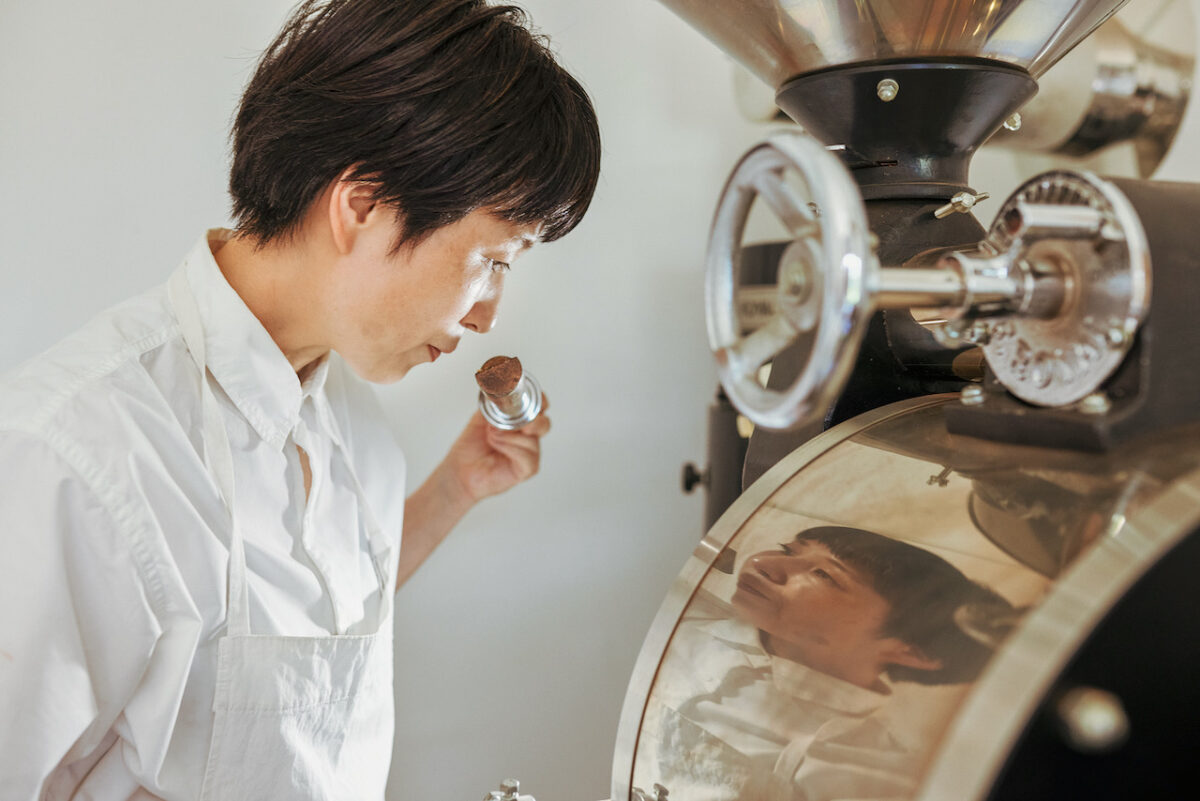
Sunaga opened Manly Coffee in 2008, after a path that moved through Starbucks, Seattle training, pastry-shop work, home planning notebooks, and competition culture. During her Starbucks years, she won the Coffee Ambassador’s Cup and became the first mom in Kyushu to be hired. She later bought a used 1kg roaster and opened her physical shop in October 2008. Manly stands in a narrow alley in Hirao, which suits the scale of the place: one roaster, one counter, one person’s accumulation of decisions (Typica).
The Brazilian Milk Chocolate/Minas Gerais milk brew is a key order when it is on. Sunaga prepared it as a caramel-rich drink dusted with cardamom, after steering a visitor away from a standard espresso order toward something new. Sunaga had Rwandas ready for AeroPress and Brazils for the La Marzocco Linea.
Basking Coffee (Ropponmatsu)
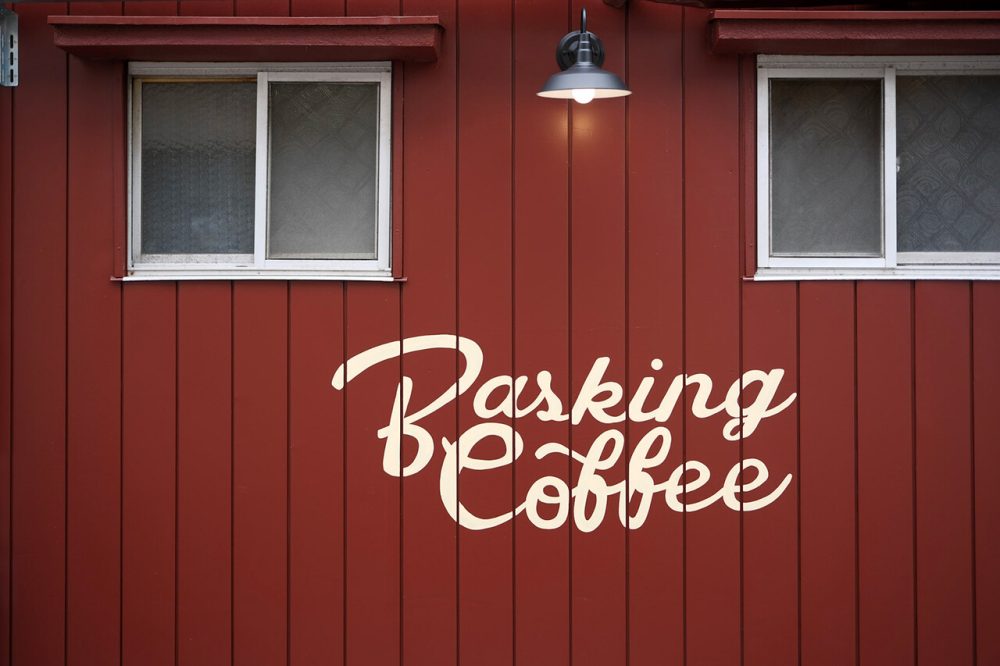
Basking Coffee’s Ropponmatsu branch announces itself before the cup, through colored louvered shutters near the Ōhori Park route. The park sets up the visit well: a trail around a pond, herons on the water, then a walk south into a shop where the register sits near a Synesso S200 and the service runs with more ease than script.
Keita Enohara founded Basking Coffee after a route that included playing in a punk band, working at Honey Coffee, and traveling through Central America’s coffee-producing regions. He opened his first shop in 2014, then three more followed. Basking Coffee feels like a shop built from music, travel, service, and coffee.
The Indonesia doppio is a key order when it is on the bar. Basking Ropponmatsu fits after Ōhori Park, before dinner, or as an espresso station with enough room to linger outside.
The Ropponmatsu branch stays open until 7 p.m., which gives it a late-day function many specialty cafes do not serve. Manly or Sym can take the morning, the park can take the afternoon, and a doppio on Basking’s patio can close the route before the neighborhood turns over to evening.
Details:
- Hours: Open until 7 p.m.
Rec Coffee (Yakuin)
Rec Coffee began with an old takoyaki truck, a loan, and two founders willing to turn a street-food shell into a moveable cafe. Yoshikazu Iwase and Osamu Kitazoe made that gamble before Rec opened its first brick-and-mortar store in Yakuin in 2010. The company is now a nine-shop international chain with branches in Tokyo and Taiwan, but Yakuin is the useful origin point.
Iwase gives Rec its competition spine. On one visit, Rec had two espresso options and six filter coffees. A menu that broad needs staff who can steer without slowing the line, and Rec’s growth from truck to international chain depends on that translation.
The Brumas Gesha Apple Anaerobic was the filter coffee singled out in the Fukuoka account that brought Rec into this route. The name alone gives the barista enough to talk through process and expectation: Gesha, fruit-driven processing, filter clarity. The two-option espresso setup gives the barista room to steer the brighter or heavier pull.
Yakuin also gives Rec a time-of-day role. Rec Coffee Yakuin Station stays open until midnight or 1 a.m. most days, part of Fukuoka’s “closing coffee” habit. That schedule makes it a rare specialty stop for after ramen, after a train transfer, or after an evening when calibrated espresso is still the point.
Details:
- Hours: Open until midnight or 1 a.m. most days
Cs Somme Café (Fukuoka)
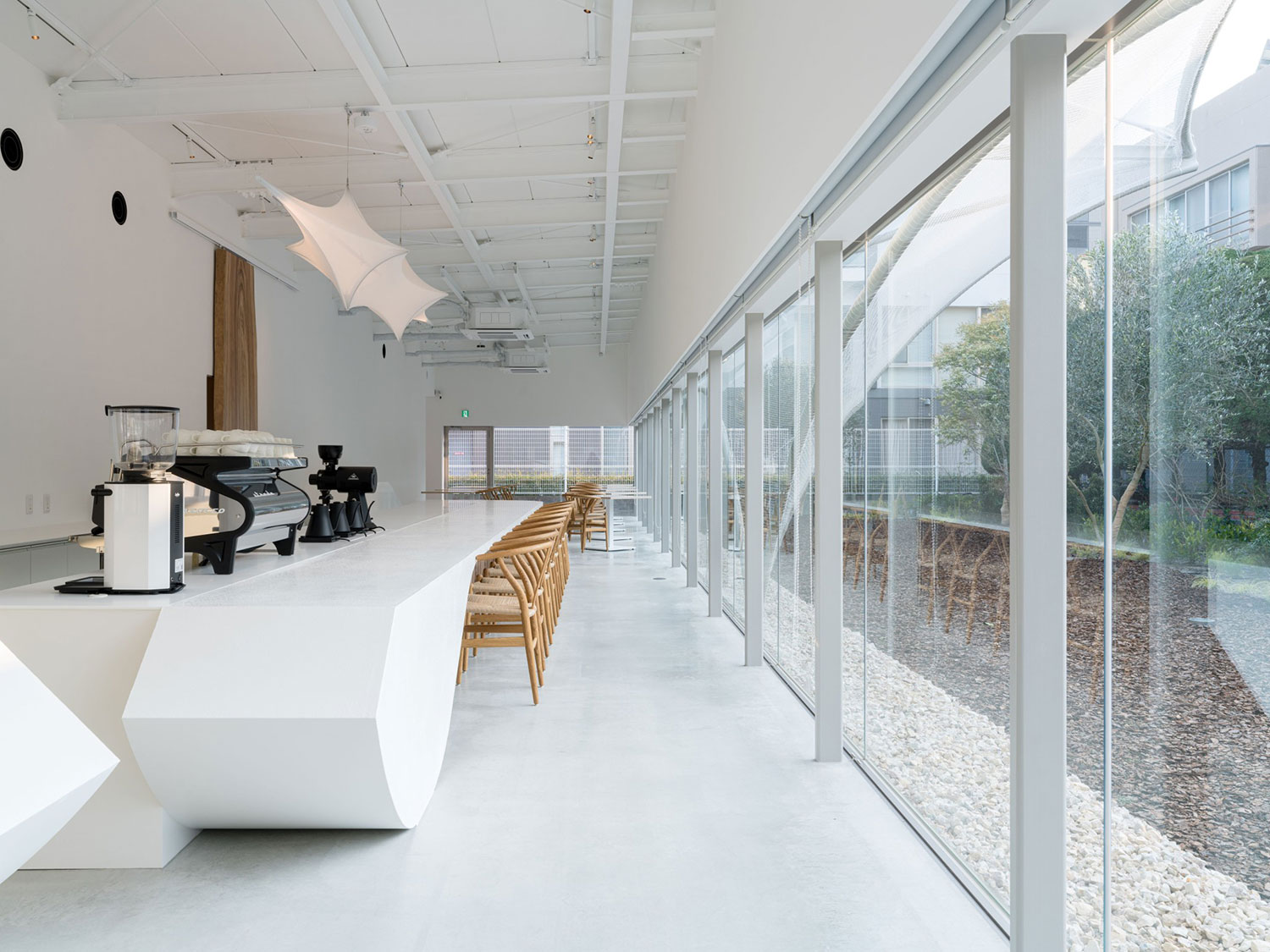
Cs Somme Café starts with arches, sunlight, and a bar that puts the servers in open view. Kengo Kuma and Associates designed the cafe, bringing the same office named for projects including the Japan National Stadium into Fukuoka’s coffee circuit. The room uses sunlight and sightlines to put service in view before the first pour.
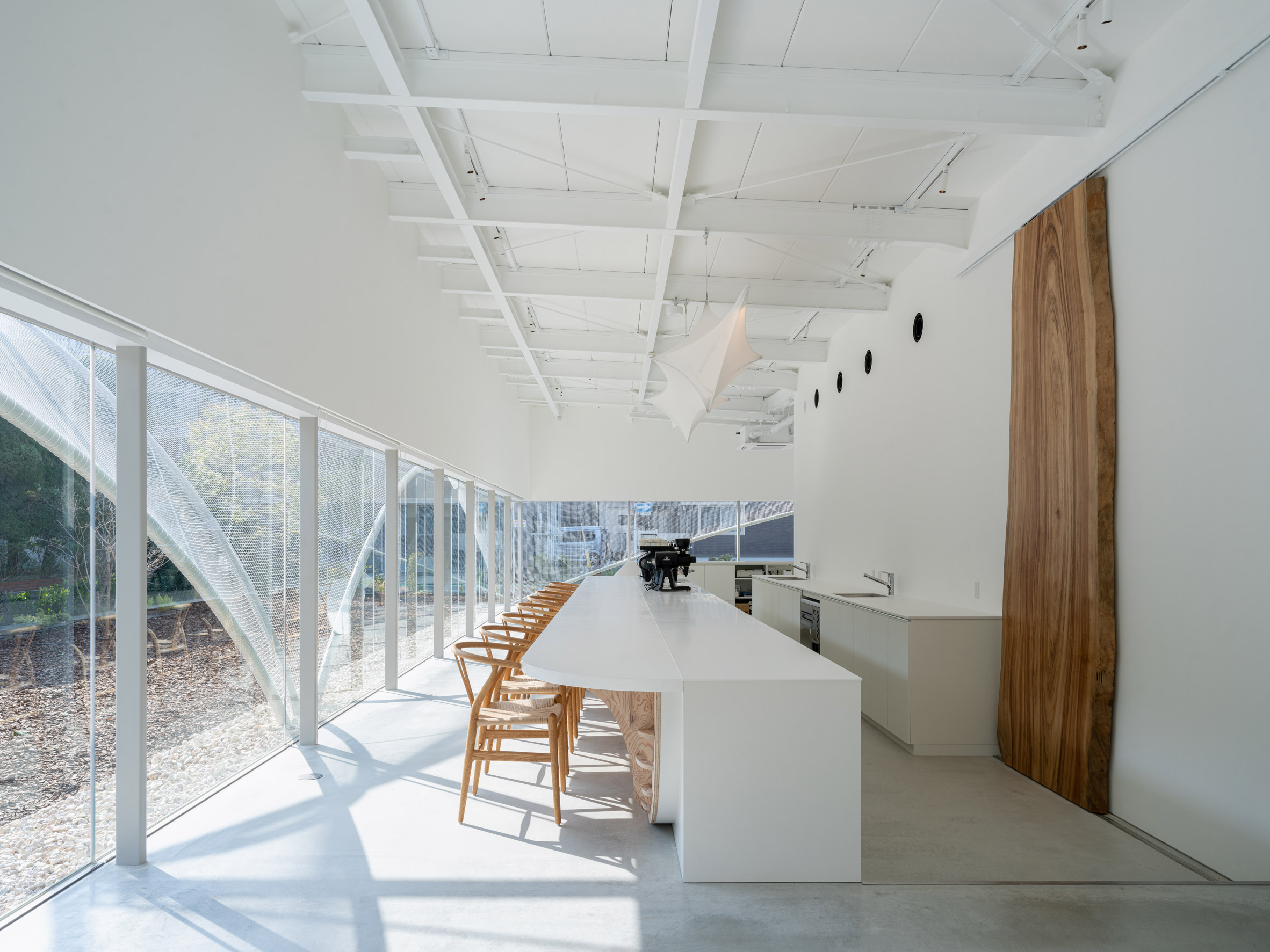
Outside, mesh-fitted arches filter sunlight across the facade. Inside, ivory surfaces, wide garden-facing windows, and a long bar with a lute-like profile frame the service. A La Marzocco Strada sits on that bar. The placement gives customers an unblocked line to the people making drinks, which is the architectural version of an open kitchen: the labor stays visible.
The coffee program draws pour-over roasts from Kurasu Kyoto and espresso roasts from Rostro. Hoshino Seichaen supplies the Japanese tea, including sencha, matcha, and gyokuro. That split makes the order simple. The coffee side centers on pour-over, while the tea side includes matcha with the Hokkaido Baked Cheesecake. The cheesecake has been described as silky.
Cs Somme is built around how a cafe handles attention. The seating, windows, garden view, bar line, and equipment all direct the eye toward process. In a city full of serious coffee counters, this is the stop where design makes service legible.
Sym Coffee Roasters (Maidashi)
Sym Coffee Roasters opens wide, literally. Shoji-like sliding glass doors let the cafe spill between inside and outside, so a latte can begin at the bar and finish in the air. The shop opened in 2025 in Maidashi as a partnership between Ethan Gwon of Momos Coffee in South Korea and Rui Kondō of Rec, giving Fukuoka a new counter with a Busan connection.
The equipment list includes a Victoria Arduino Black Eagle Maverick, Mythos grinders, and an all-white Probat. Sym also gives guests a way to smell grounds before ordering through Squeaky sniffers, described as Victrola-trumpet-looking tools made for whiffing the coffee. Squeaky sniffers let guests smell grounds before ordering. It lets a guest test roast and aroma before committing to a cup.
The morning window is the key time for Sym. From 8 to 11 a.m., Sym discounts its “Morning Coffees” by 80 to 150 yen on drip roasts, espressos, and americanos. The shop’s food personality is clearest when the coffee is paired with toast. The choices include pizza toast, grapefruit toast, avocado toast, teriyaki toast, and an open-faced strawberry sandwich toast.
Sym is the newest stop in this Fukuoka coffee guide, and it shows where the city is still moving. The partnership links Momos Coffee’s South Korean orbit with Rec’s Fukuoka base, while the menu keeps the morning practical. Go early, smell the grounds, pick the drink after that, then decide whether grapefruit toast or espresso is the sharper way to wake up.
Details:
- Hours: Morning Coffee discounts from 8 to 11 a.m.
- Price: Morning Coffees discounted by 80 to 150 yen
Honey Coffee (Fukuoka)
Honey Coffee enters the route through a cup: Brazil Caxambu solo, served as one half of a Flight Set and pulled on a Sanremo Café Racer into a Takatoriyaki cup. That is enough to place the shop in Fukuoka’s craft conversation. The espresso, the flight format, the machine, and the ceramic all point toward a counter that thinks about how coffee lands in the hand.
Honey Coffee also sits in the background of Basking Coffee’s story. Keita Enohara worked there before founding Basking in 2014, after his years playing in a punk band and traveling through Central America’s coffee-producing regions. In a city where COF-FUK connected several operators through cuppings and shared notes, Honey Coffee reads as another training ground, the kind of place whose influence shows up later in another founder’s service style.
The Flight Set is a key order when it is available, especially if Brazil Caxambu is one of the components. A split order gives more information than a single espresso, and the Sanremo Café Racer detail suggests a bar set up for espresso with intent. The Takatoriyaki cup adds one more layer: local ceramic texture in a tasting format often treated as purely technical.
Honey Coffee works as a calibration stop. Honey Coffee’s espresso presentation can be compared with Manly’s milk brew, Basking’s doppio, Rec’s filter spread, and Sym’s morning menu. The value is in the sequence. By the time you reach this cup, the city’s coffee language starts to repeat its key words: origin, machine, vessel, person.
What's Next
Fukuoka’s coffee map keeps its older kissaten habits close while letting competition technique and architectural cafe design change the route. Coffee Bimi’s 1977 in-house roasting history, COF-FUK’s 2007 volunteer cuppings, Manly’s AeroPress culture, Rec’s truck-to-Yakuin growth, and Sym’s 2025 Korea-Japan partnership all point to a city where craft spreads through counters before it becomes a headline.
Plan the day by time and texture. Start early at Sym for the 8 to 11 a.m. morning window, take Manly when you can give Sunaga’s counter your full attention, put Basking after Ōhori Park before 7 p.m., and save Rec Yakuin Station for the city’s late closing coffee habit. The next Fukuoka coffee guide will probably add more names, but these six already give you the city’s working grammar: roast, brew, serve, write it down.