Why go
Gelato at the Edge of the Tropics
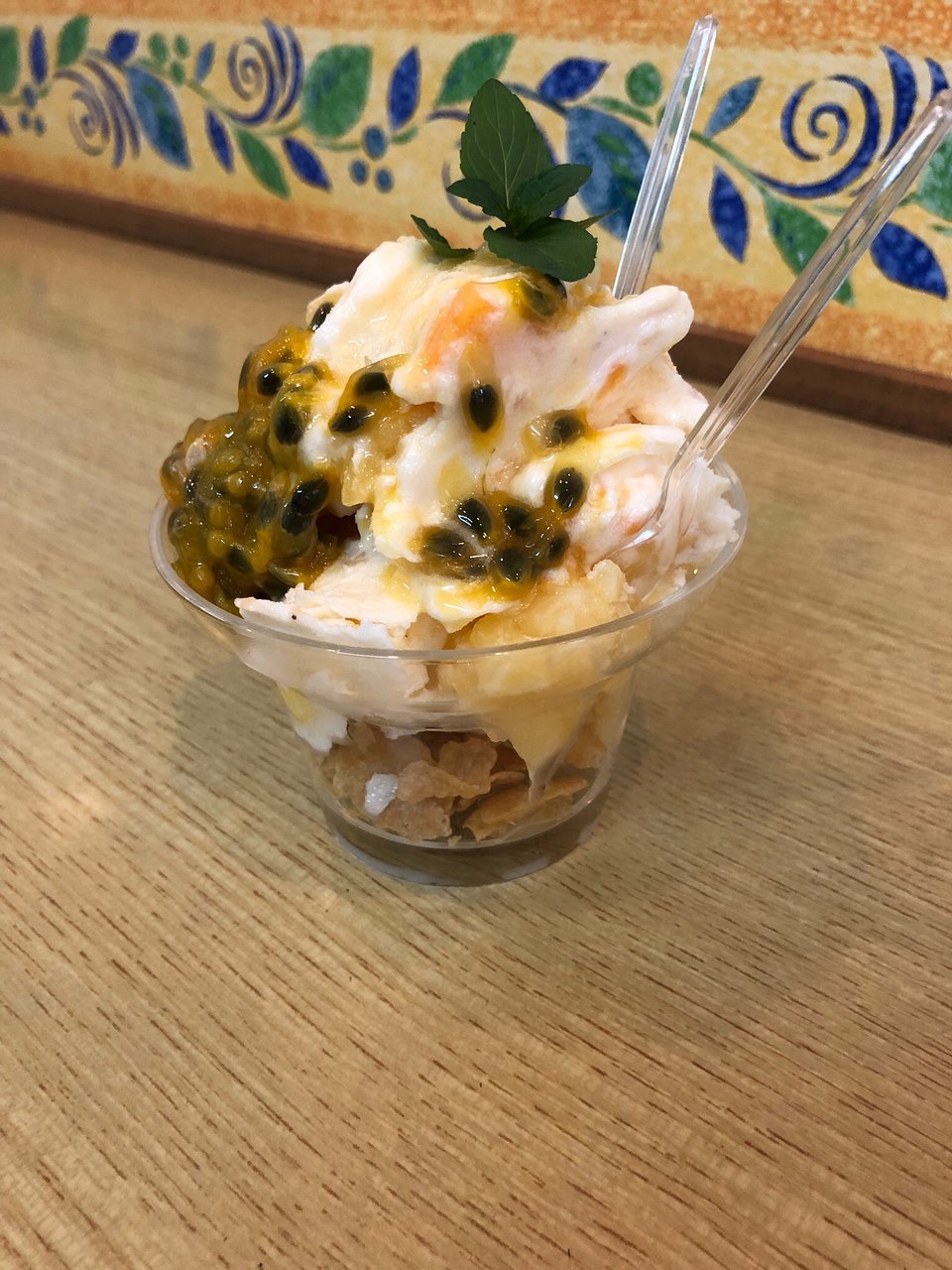
Hau Tree Gelato is a casual restaurant in Ishigaki serving Ishigaki Island Fruit Gelato. Temperatures stay warm through much of the year, the light has a particular flatness in the afternoon hours, and the town centre moves at a pace that resists urgency. Into this setting, Hau Tree Gelato introduces a format more associated with Italian piazzas than Japanese island towns: slow-churned gelato served in small portions, meant to be eaten while standing or wandering rather than seated at a table.
That format has more logic here than it might first appear. Okinawa prefecture, of which Ishigaki is a part, has a well-documented tradition of using subtropical fruits, shikuwasa citrus, passion fruit, mango, and purple sweet potato among them, in sweets and desserts. Gelato, with its lower fat content and higher density than American-style ice cream, turns out to be a receptive medium for those flavours: the intensity of a shikuwasa or a Yaeyama mango reads clearly in a gelato base where it might be muted in a richer frozen format. The result is a category that sits somewhere between local confectionery tradition and an Italian technique imported and adapted.
What the Yaeyama Ingredient List Brings to a Gelato Counter
Across the Japanese island chain, the relationship between local agriculture and artisan food production has grown considerably over the past decade. In Okinawa specifically, the push to use prefectural produce in higher-value food formats reflects both a tourism economy that rewards distinctiveness and a farming sector that has cultivated export-quality tropical fruits. Shikuwasa, a small green citrus native to Okinawa, has particular culinary momentum: its tartness is more complex than lemon, it holds its acidity through processing, and it has enough regional identity to function as a marker of place on a menu or a gelato chalkboard.
Ishigaki mango, grown in the island's warm conditions, operates at a different register: ripe, concentrated, and sweet enough to carry a frozen format without added reinforcement. Purple sweet potato (beni-imo) appears across Okinawan sweets culture as both a flavour and a visual signal, its distinctive violet colour has become something of a regional emblem. A gelato counter drawing on this ingredient set is, in effect, producing a compressed map of the Yaeyama agricultural calendar, translated into something a visitor can eat in three minutes while deciding which street to walk down next.
For context on Ishigaki's broader food scene, Akaishi Shokudou and Nakayoshi Shokudou represent the island's comfort-food tradition, Okinawan soba and home-style cooking, while Ishigaki Jima Kitauchi Bokujou and Amuritano-niwa sit squarely in the premium beef category that Ishigaki has built a national reputation around. Hau Tree Gelato occupies a quieter register than any of those: a between-meal stop rather than a destination meal, lighter on ceremony and lower in price point, but connected to the same regional ingredient logic.
The Cultural Positioning of Frozen Sweets in Japan
Japan has an established culture of soft-serve and frozen treats calibrated to regional tourism: matcha soft-serve in Kyoto, uni ice cream in Hokkaido, citrus sorbet in various coastal prefectures. The pattern is consistent, visitors expect to encounter regional flavour in portable, affordable formats that can be consumed while sightseeing. Ishigaki, drawing increasing numbers of visitors both domestic and international, fits that pattern. A gelato shop using island produce participates in a well-understood register of Japanese food tourism, where the souvenir is edible and the experience is immediate rather than mediated through a reservation system.
What distinguishes a gelato format from the more common soft-serve machine is the production method: gelato is typically made in smaller batches, stored at a slightly warmer temperature than hard ice cream, and served at a consistency that requires a degree of technique to maintain. That distinction matters less to a casual visitor than to a food professional, but it does place the product in a slightly different tier than a convenience-store ice cream bar, closer to a craft category, even if the setting remains casual.
Hau Tree Gelato sits at the informal end of the spectrum: walk-in, casual, and priced for repeat visits. That contrast is part of what makes Ishigaki's food scene interesting. The same island that has Michelin-quality beef can offer a gelato counter drawing on tropical produce, the range reflects a destination with more culinary breadth than its remote location might suggest.
Planning a Visit
Ishigaki is accessible by direct flight from Tokyo, Osaka, and Naha, with journey times from Tokyo running roughly three hours. The island's compact town centre means most food stops, including gelato shops, are reachable on foot or by bicycle. Visiting in the shoulder seasons, spring or autumn, offers more moderate temperatures than the peak summer heat of July and August, though the island's subtropical climate keeps things warm through much of the year. Walk-in formats of this kind rarely require advance planning, but operating hours on smaller islands can shift seasonally.
akordu in Nara, Goh in Fukuoka, and Atomix in New York City represent different points on the formality and cuisine-type spectrum. On Ishigaki itself, Mirumiru Honpo Honten offers another angle on the island's casual food culture, and is worth pairing with a gelato stop as part of an afternoon in the town centre.