Why go
Specialty Coffee in Milan: A City Catching Up with Its Own Appetite
Milan's coffee culture has long operated on a particular set of rules: a short, sharp espresso consumed standing at a marble counter, priced low, and finished in under two minutes. Ditta Artigianale Specialty Coffee Roasters is a specialty coffee roastery and café in Milan, at Corso Magenta 31, with a price point around $15 per person. That format served the city well for decades, and the ritualistic pull of the traditional bar remains strong. But over the past several years, a parallel infrastructure has been taking shape, one oriented around sourcing transparency, roasting provenance, and formats that slow the experience down. Ditta Artigianale Specialty Coffee Roasters, on Corso Magenta 31, represents that second current in one of Milan's most architecturally coherent neighbourhoods.
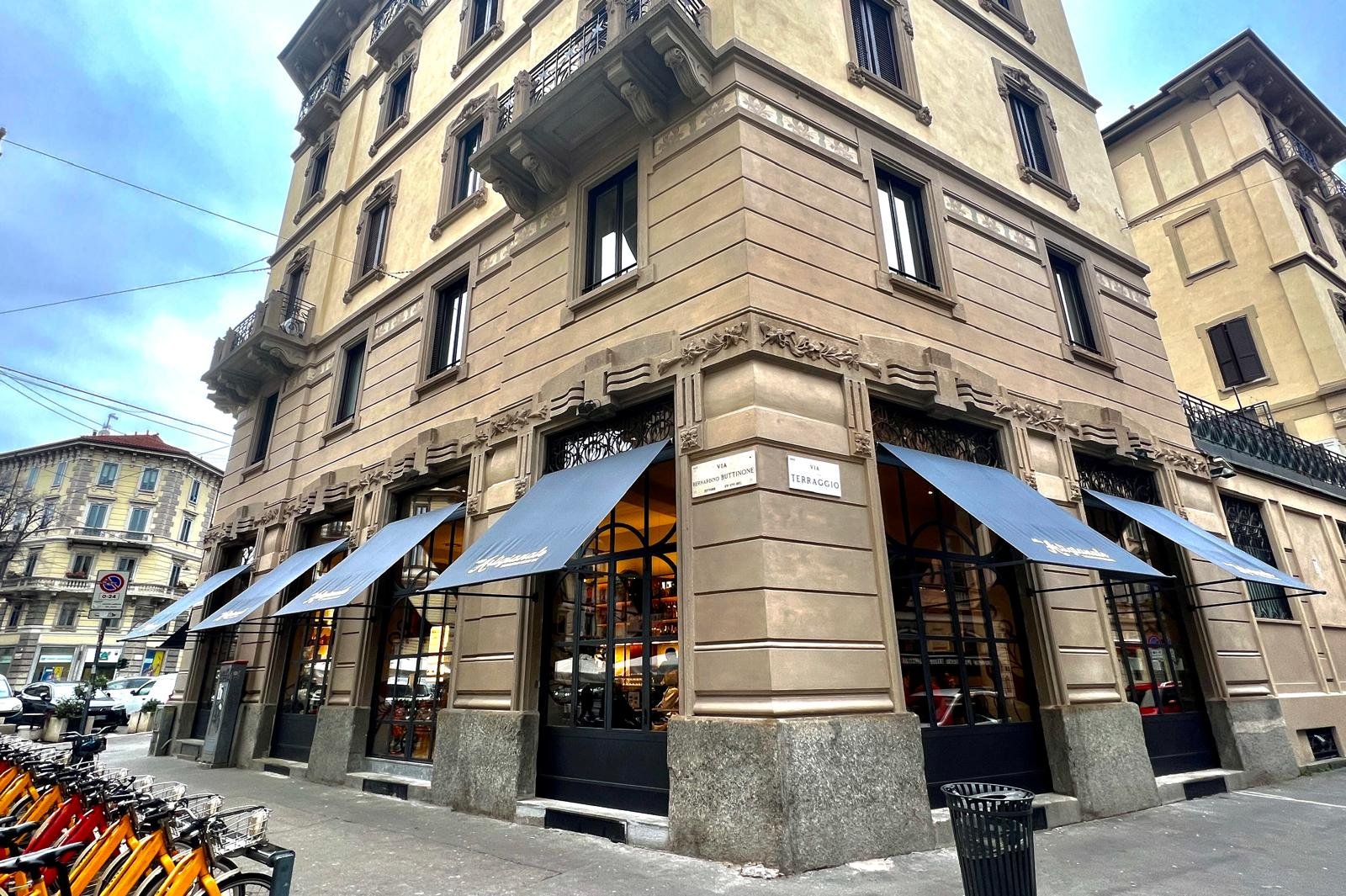
The address matters. Corso Magenta sits west of the Duomo, in a zone defined by wide pavements, 19th-century façades, and proximity to Santa Maria delle Grazie, the church that houses Leonardo da Vinci's Last Supper. The foot traffic here is different from the Navigli or Brera: slower, more intentional, weighted toward people who are going somewhere specific rather than drifting. A specialty coffee operator in this location is not competing with the high-volume espresso bar on the corner; it is positioning itself alongside the neighbourhood's broader register of considered experience.
From Florence to Milan: A Roaster's Expanding Geography
Ditta Artigianale began as a Florentine project, and its move into Milan is part of a pattern familiar to anyone who tracks Italy's third-wave coffee operators. Florence built the brand's foundation, its roasting program, its sourcing relationships, its house style, before expansion became viable. That sequence matters editorially, because it distinguishes operators who grow from a production base versus those who open retail outposts first and develop identity second. The Corso Magenta location inherits the roasting infrastructure and sourcing logic developed over years in Florence, rather than operating as a franchise-adjacent satellite.
This trajectory places Ditta Artigianale in a different competitive tier from the international chain operators that have been opening in Milan's central districts. Where those brands import a standardised format, a roaster-first operation brings something more specific: a house profile that reflects decisions made at origin and in the roastery, expressed differently depending on brew method. The evolution from single-city roaster to multi-city retailer, when done from the production side outward, tends to preserve that specificity better than the reverse.
The Specialty Coffee Shift and Where Milan Sits Now
Italy's relationship with specialty coffee has always been complicated by the weight of its own tradition. The espresso format is so deeply embedded in Italian daily life that any departure from it risks being read as cultural critique rather than extension. The more durable operators, in Rome, Turin, and increasingly Milan, have found a way to run both registers simultaneously: the short pull for the traditionalist, the filter option and single-origin transparency for the customer who wants to understand what they're drinking. This dual-track approach has become the functional standard for Italian specialty shops that intend to survive past their opening year.
Milan's particular version of this shift has accelerated since the mid-2010s, when a cluster of independent operators began opening in the Navigli, Isola, and Porta Romana districts. By the time Ditta Artigianale arrived on Corso Magenta, the city had already built a small but coherent specialty coffee audience, one that understood what a pourover implied and had opinions about roast levels. The Corso Magenta location is not opening into a blank market; it is entering a conversation that has been running for several years.
The Neighbourhood as Context
Corso Magenta's dining and drinking ecology is quieter than the city's headline food districts. The restaurants that perform well here, neighbourhood trattorias, wine bars with short lists, aperitivo spots that don't need to advertise, tend to be places locals return to rather than venues that rely on tourist discovery. A specialty coffee shop in this context is a complement to that rhythm rather than an interruption of it: a morning stop before the museums, a mid-afternoon break during a long walk, a place to sit with something well-made without the noise of a busier district.
For visitors using Corso Magenta as a base for exploring Milan's western cultural corridor, the Pinacoteca di Brera is a reasonable walk north, and the Castello Sforzesco is close to the east. The Ditta Artigianale location functions as a practical anchor point. The area is well-served by the M1 and M2 metro lines, with Cadorna the most useful stop for arriving from the city centre. Getting there does not require significant planning; it rewards the visitor who is already moving through this part of the city.
Milan's highest-profile restaurant scene operates in a different register entirely. The city's Michelin-starred tier includes Enrico Bartolini, Cracco in Galleria, Andrea Aprea, and Seta, operators working at the €€€€ tier where multi-course tasting formats and advance reservations define the experience. Verso Capitaneo represents the creative end of the same city. Ditta Artigianale sits in an entirely different part of that ecosystem: daily-use rather than occasion-driven, drop-in rather than pre-booked, priced for repetition rather than celebration. The two ends of Milan's food and drink spectrum coexist without much friction, and understanding where a specialty coffee operator sits within that range clarifies what kind of visit it serves. See our full Milan restaurants guide for the broader picture.
Italy's wider restaurant geography, for context, includes some of the country's most formally recognised tables: Osteria Francescana in Modena, Enoteca Pinchiorri in Florence, Piazza Duomo in Alba, Le Calandre in Rubano, Reale in Castel di Sangro, Uliassi in Senigallia, Dal Pescatore in Runate, Quattro Passi in Marina del Cantone, Atelier Moessmer Norbert Niederkofler in Brunico, and Casa Perbellini 12 Apostoli in Verona. These are the tables that require months of planning. Ditta Artigianale does not require advance planning, which is, in its own way, part of what makes it useful. Internationally, operators like Le Bernardin in New York and Lazy Bear in San Francisco represent the tasting-menu format at its most committed, a useful contrast when thinking about how much of Milan's food culture operates at precisely the opposite register of formality.
Planning a Visit
Corso Magenta 31 is the address, in the 20123 postal district of central Milan. The M1 Cadorna stop is the most direct metro connection. As with most specialty coffee operators in Italian cities, morning and mid-morning are the periods of highest throughput; arriving mid-afternoon tends to offer more space. No booking is required or expected, the format is walk-in, counter-service, and self-directed. Pricing, hours, and current menu details are best confirmed directly, as these details are not held in our current database record.