Why go
Pearl District Ice Cream and the Ethics of the Scoop
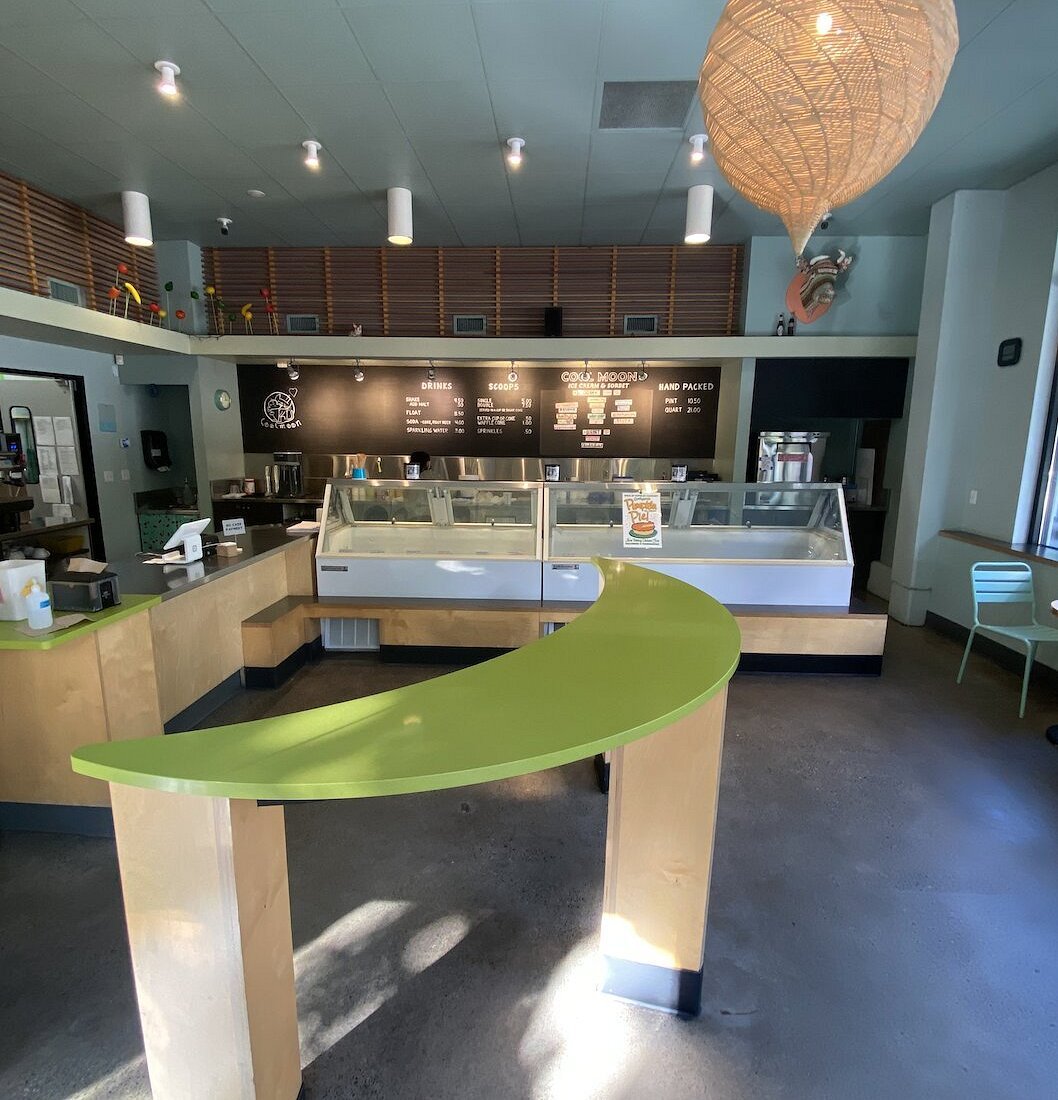
On NW Johnson Street, just off the retail corridor that anchors Portland's Pearl District, Cool Moon Ice Cream occupies the kind of storefront that rewards foot traffic over destination dining. The Pearl has spent two decades consolidating its identity as a neighbourhood of converted warehouses, gallery spaces, and food-forward independents, and the ice cream shop fits that pattern: small-batch, locally sourced, and operating at a price point and format that keeps it accessible for residents and visitors alike. What separates it from the broader American ice cream category is an operating philosophy that treats ingredient sourcing as a structural commitment rather than a marketing posture.
Sourcing as Structure, Not Story
Portland's independent food scene has long positioned ethical sourcing as a baseline expectation rather than a premium differentiator. Restaurants like Kann and Langbaan operate within supply chains that prioritise regional producers, and that culture filters down to the counter-service tier. Cool Moon sits within that tradition, sourcing dairy and other inputs from Oregon producers and building its flavour range around what is available seasonally. That approach produces a menu that shifts across the year rather than maintaining a static roster of year-round staples.
The sustainability argument for small-batch ice cream extends to production volume, waste management, and the decision not to over-produce. A shop operating at Cool Moon's scale makes batches to meet anticipated demand rather than manufacturing to a shelf-life model. That means less waste at the back end and a product that turns over quickly enough to remain at its finest. For a frozen product, freshness matters: ice cream made in smaller quantities and consumed within a shorter window has a texture and flavour profile that factory-scale production cannot replicate.
The Pearl District Context
Understanding Cool Moon's positioning requires some sense of what the Pearl District has become. It is not the most residential neighbourhood in Portland, and it draws a mix of local workers, gallery visitors, and tourists navigating between Powell's Books and the South Park Blocks. That foot traffic sustains a particular kind of independent retail: businesses that can generate enough volume from passing trade to justify street-level space, while maintaining enough quality to retain neighbourhood regulars. An ice cream shop in this context is not a novelty operation; it is a functional part of the neighbourhood's daily rhythm.
Portland's broader food culture has produced a comparable set that Cool Moon sits alongside rather than above. The city's restaurant scene includes destination-level operations, such as Berlu and Nostrana, which operate with the kind of formal ambition that attracts national recognition. Cool Moon operates in a different register entirely, but the underlying values that define Portland dining — provenance transparency, seasonal thinking, independent ownership — run through both tiers. That consistency is part of what makes Portland's food scene coherent rather than stratified.
How It Compares to the Wider Ice Cream Category
American artisan ice cream has developed a recognisable set of markers over the past fifteen years: small batch, named dairy sources, rotating seasonal flavours, and physical retail built around a counter experience rather than a packaged product. Cool Moon operates within this model, which places it in a peer group that is defined less by geography than by production philosophy. The comparison is not with the national chains or the supermarket premium tier; it is with the handful of independent shops in each city that have made sourcing decisions a visible part of their identity.
That peer group has grown considerably since the mid-2000s, when artisan ice cream was a genuine niche. In Portland specifically, the category has enough depth that a shop must have a clear point of distinction. Cool Moon's position in the Pearl District, its longevity in the neighbourhood, and its commitment to Oregon dairy sources give it a stable identity that does not rely on novelty flavours or Instagram-driven launches to maintain relevance.
For context on how sustainability-led food operations work at the highest formal level, it is worth noting what farms-to-table programmes look like at restaurants such as Blue Hill at Stone Barns or Single Thread Farm in Healdsburg. Those operations integrate sourcing, agriculture, and menu design at a level that a counter-service shop cannot replicate, but the underlying logic, reduce the distance between producer and consumer, work with seasonal rhythms, minimise waste, is the same. Cool Moon operates that logic at a different scale and price point, which makes it accessible rather than exclusive.
Flavour Approach and Seasonal Range
Specific flavour names are not confirmed here. Its flavour range is tied to seasonal availability, so the selection in late summer will differ from winter. Visitors planning a trip around a particular flavour should confirm availability before visiting. What remains consistent is the dairy base: Oregon-sourced milk and cream form the foundation of the product.
Know Before You Go
Address: 1105 NW Johnson St, Portland, OR 97209
Neighbourhood: Pearl District
Format: Counter-service ice cream shop
Hours: Not confirmed, verify directly before visiting
Booking: Walk-in only; no reservation required
Price range: Counter-service pricing; no confirmed figures available
Getting there: The Pearl District is walkable from downtown Portland and accessible via MAX light rail; street parking is available on surrounding blocks
Frequently Asked Questions
Is Cool Moon Ice Cream okay with children?
Portland's Pearl District is a mixed-use neighbourhood that draws families alongside its gallery and retail crowd, and a walk-in ice cream counter at street level is about as child-friendly a format as exists in the city's food scene. There are no booking requirements, no dress code, and no formal service structure to navigate. If you are visiting Portland with children and looking for a low-pressure stop between Powell's Books and the waterfront, the format here is well-suited to that kind of spontaneous visit. Pricing at counter-service ice cream shops in Portland's independent tier typically runs lower than restaurant dessert courses, which makes it a practical choice for groups.
What kind of setting is Cool Moon Ice Cream?
This is a counter-service shop in a street-level retail space in the Pearl District, which is Portland's most formally developed neighbourhood in terms of gallery density and converted warehouse architecture. The format is informal and quick: you order at the counter, choose your flavours, and eat on site or take it to the street. There are no tasting menus, no sommelier, and no dress expectation. It sits at the opposite end of the format spectrum from Portland's destination restaurants such as Langbaan or Berlu, though the sourcing values that define those kitchens are present here at a counter-service scale.
What's the must-try dish at Cool Moon Ice Cream?
Specific menu items cannot be confirmed from available data, and a shop with a rotating seasonal range will have a different answer to this question in August than it does in January. The more useful frame is to ask what is made with local Oregon dairy and what reflects the current season's fruit or flavour availability. Counter staff at shops operating on this model are typically well-placed to point you toward what is freshest. For confirmed current flavours, contact the shop directly before visiting.
Does Cool Moon Ice Cream make its ice cream in-house, and what does that mean for the product?
Cool Moon operates as a small-batch producer using Oregon-sourced dairy, which means the ice cream is made on a production schedule tied to shop demand rather than a factory distribution model. In practical terms, this produces a denser, less aerated product than mass-market alternatives, and one that does not require the stabiliser load that extended shelf-life products need. The trade-off is that specific flavours may sell out on a given day; the advantage is a base product with a cleaner ingredient list and a freshness window that rewards visiting regularly rather than treating any single visit as definitive.
For more on Portland's independent food scene across all formats and price points, see our full Portland restaurants guide. For sustainability-led dining at the formal end of the American restaurant spectrum, Blue Hill at Stone Barns, Single Thread Farm, and Smyth in Chicago represent the category at its most developed. For other Portland dining options across cuisine types, Ken's Artisan Pizza and Nostrana anchor the Italian and pizza tier, while Kann and Langbaan represent the city's most serious formal dining. Further afield on the West Coast, Lazy Bear in San Francisco, Providence in Los Angeles, and Addison in San Diego each represent the sustainability and provenance-led approach at different price points and formats. For those planning broader US itineraries, Le Bernardin in New York City, Atomix, Emeril's in New Orleans, The Inn at Little Washington, and The French Laundry in Napa offer context for how the country's most formally ambitious kitchens approach similar questions of sourcing and seasonality. For international reference points, Atelier Moessmer Norbert Niederkofler in Brunico is among the clearest examples of how sustainability can function as a total organisational principle rather than a single-dish statement.