Why go
Where Akan's Landscape Enters the Cup
The Akan caldera region of eastern Hokkaido operates at a different pace from the rest of Japan's food culture. This is not the precision-choreographed kaiseki of Kyoto, as practised at places like Gion Sasaki, nor the hyper-technical omakase that defines Tokyo counters such as Harutaka. Akan is a volcanic lake district, ringed by caldera walls, home to the Ainu people for centuries, and visited primarily by travellers who have made a deliberate choice to come somewhere genuinely peripheral. The coffee shops and small restaurants that serve this community reflect that geography: the sourcing logic here begins with what the land and the surrounding forest and lake system actually produce, rather than with what a supplier catalogue offers.
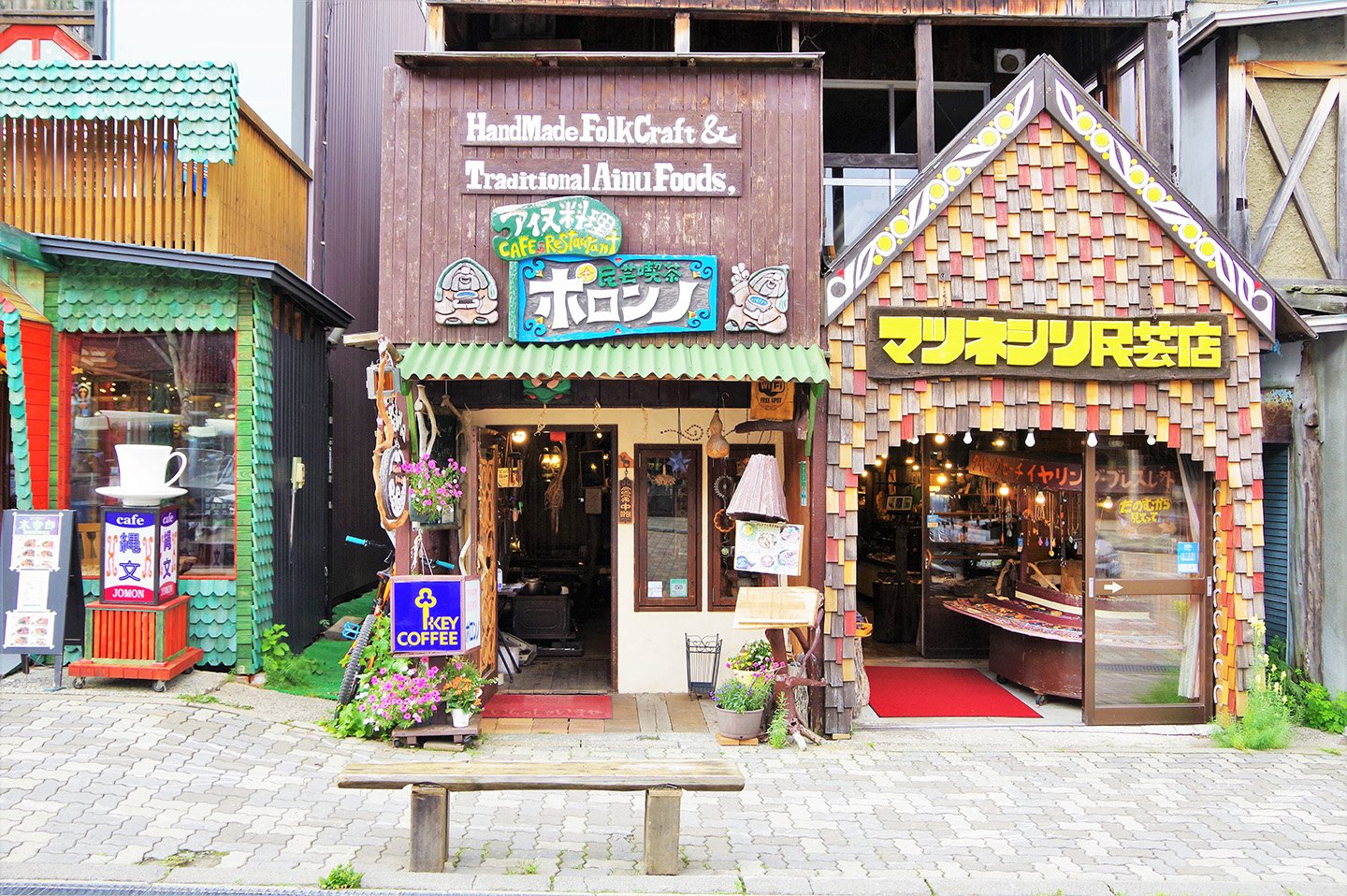
Coffee Shop Poronno is a casual Traditional Ainu Cuisine restaurant in Akan, Hokkaido, with a price tier of 2 and an average spend of about US$15 per person. The name itself carries Ainu linguistic roots, which positions the establishment within a broader pattern of Akan businesses that draw on Indigenous heritage as both cultural acknowledgement and operational identity. In a district where the Ainu cultural village, Ikor, and several craft and performance spaces have created a small but coherent ecosystem around Ainu heritage tourism, a coffee shop bearing an Ainu-derived name is making a legible statement about its place in that ecosystem.
The Ingredient Logic of a Remote Hokkaido Table
Hokkaido's sourcing advantages are well-documented at the national level: the island accounts for a disproportionate share of Japan's dairy production, its potato and wheat cultivation, its venison and bear hunting, and its cold-water seafood. What is less often noted is how those advantages become more pronounced, not less, the further east you travel from Sapporo. In the Akan district, the supply chain from producer to plate shortens considerably. Dairy from farms in the Kushiro basin, freshwater fish from Akan-ko itself, including the rare marimo-adjacent ecosystem that makes the lake biologically distinct, and foraged ingredients from the surrounding birch and conifer forest all become plausible daily inputs for any kitchen operating with local intent.
For comparison, the Michelin-starred innovations of HAJIME in Osaka or the refined creative cooking at akordu in Nara engage with provenance through a highly mediated, chef-curated lens. At a small Akan coffee shop, the provenance argument is simpler and more direct: the region produces it, the kitchen uses it, the guest drinks or eats it. That directness is not a lesser form of engagement with ingredients, in some respects it is the more honest one.
The broader Hokkaido coffee culture, which has developed significant depth in Sapporo and across the island's mid-sized cities, has a quieter outpost in Akan. Establishments like 夕来山乃 in Sapporo represent one end of that spectrum; a lakeside coffee shop in a remote onsen town represents another. Both are legitimate expressions of how Hokkaido has developed its own cafe sensibility, distinct from the third-wave orthodoxies of Tokyo or Osaka.
Akan as a Dining Destination: Context for the Visitor
Travellers who arrive in Akan have typically made a multi-hour journey from Kushiro, the nearest city with a regional airport, or an even longer transit from Sapporo. The road distance from Kushiro to Akan-ko is roughly 60 kilometres, but the terrain and road conditions, particularly outside the summer and early autumn window, mean the journey demands planning. This is not a day-trip dining destination from a major hub in the way that, say, a restaurant outside Kyoto or Nara might be.
That remoteness structures the entire food culture of the district. Restaurants and cafes in Akan serve a guest population that is already committed: they have booked an onsen ryokan, they are spending multiple nights, they are interested in the lake, the Ainu cultural programming, and the particular atmosphere of a spa town that feels genuinely separate from urban Japan. The dining options here do not need to compete with the density of a city food scene. They need to be good enough to anchor a day, and specific enough to feel worth seeking out rather than merely convenient.
For visitors orienting themselves within Japan's broader regional dining picture, it helps to understand that Hokkaido's eastern districts occupy a different register from the island's western culinary reputation. The standout restaurants along Japan's western arc, Goh in Fukuoka, or the seafood-forward counters of the Noto Peninsula anchored by spots like 三本木 川魚製 in Nanao, operate within well-established culinary narratives. Eastern Hokkaido is still in the process of defining its own narrative, which makes it more open and, for the right kind of traveller, more interesting.
Planning a Visit to Akan
The practical reality of visiting Coffee Shop Poronno is shaped by Akan's seasonal rhythms. The district draws the largest visitor numbers during summer (July to September), when the lake is navigable by boat and the surrounding trails are accessible, and again during winter, when the onsen culture becomes the primary draw and the landscape takes on the severe, monochrome quality that Hokkaido's winter is known for. Shoulder seasons, particularly late October through November, when the caldera birch trees turn and the tourist pressure drops, offer a different, quieter version of the same place.
Visitors should treat Coffee Shop Poronno as a walk-in establishment oriented toward the town's existing guest population. The Akan-ko area's main street and lakefront are compact enough that orienting yourself takes minutes rather than hours.
For travellers building a wider Japan itinerary around food, the district's options can be explored through nearby local restaurants and cafes.