Why go
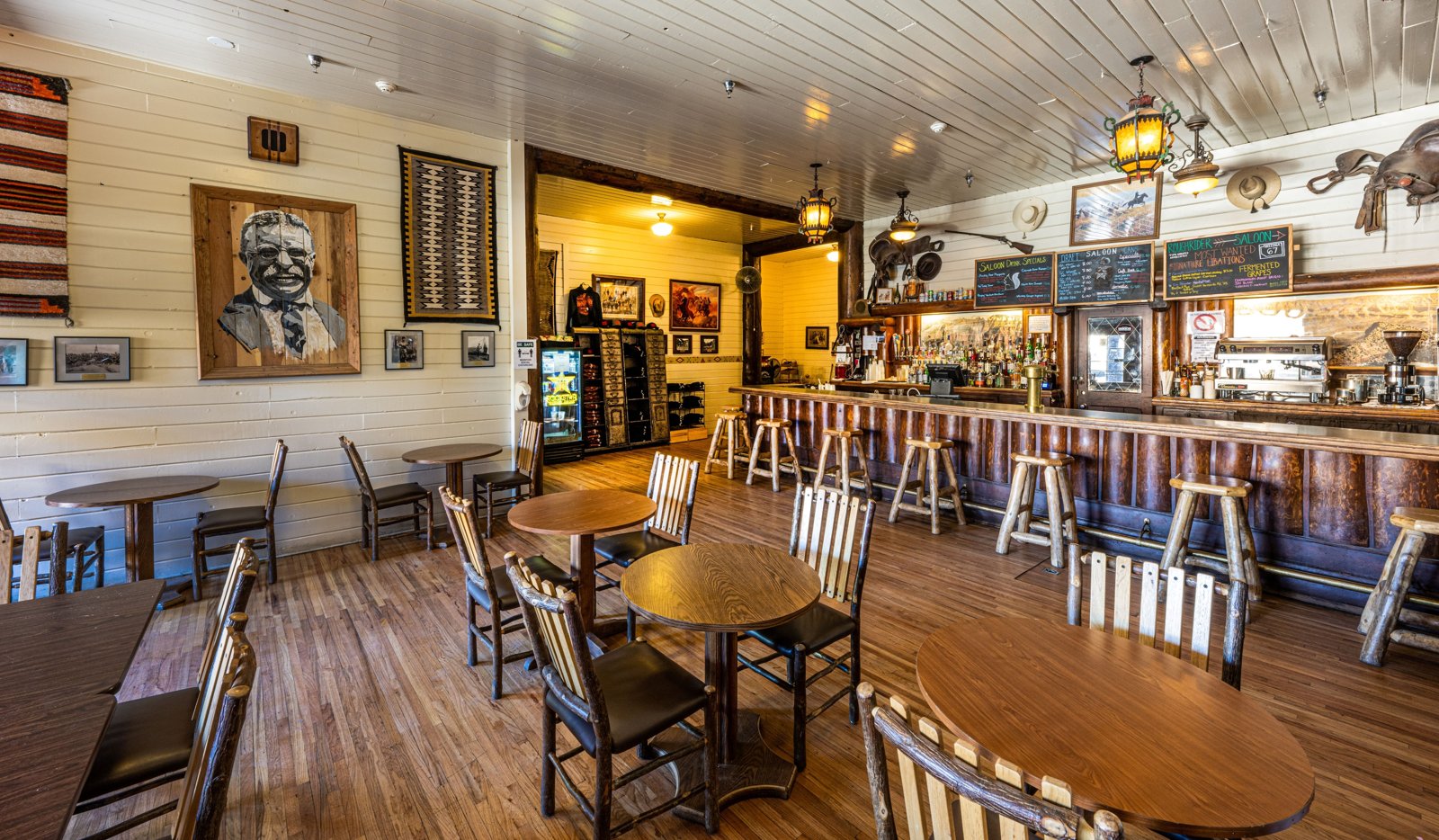
Approaching the North Rim’s main lodge, the dining scene changes before the menu does: pine forest, thin high-elevation air, trail dust on boots, and visitors moving between viewpoints rather than nightlife blocks. Coffee Saloon belongs to that specific travel pattern. Food here is tied to remoteness, seasonality, and the logistics of feeding guests on the quieter rim of the Grand Canyon, not to the competitive restaurant grammar of Phoenix, Los Angeles, or New York.
The North Rim asks a different question of a meal: can it serve the day’s pace without pretending the canyon is a dining district? In that context, Coffee Saloon works as a lodge-adjacent stop inside a limited hospitality ecosystem. The useful comparison is not a tasting counter or chef-driven room, but nearby park dining formats such as Deli in the Pines and Phantom Ranch Canteen, each shaped by access, foot traffic, and the realities of a protected landscape.
North Rim eating is defined by supply lines, not restaurant theatrics
Ingredient sourcing at the canyon’s northern edge has to be read through geography. The North Rim is higher, quieter, and more seasonal than the South Rim, with fewer dining options and a shorter visitor window. That changes the meaning of freshness and range. A restaurant in a dense city can build identity around market proximity, specialist purveyors, and daily menu changes; a lodge operation at the canyon works inside longer delivery routes, limited storage realities, and a guest base that often wants fuel before or after hiking.
That does not make the food culture less interesting. It makes it more revealing. Remote hospitality tends to expose the gap between romantic travel expectations and operational fact. Coffee, quick meals, simple formats, and steady service become the grammar of the place. In a park setting, the sourcing story is often about what can be brought in reliably, held safely, and served at scale without breaking the rhythm of visitors moving between trails, cabins, overlooks, and shuttle schedules.
This is where Coffee Saloon is useful to understand the North Rim’s dining character. It sits in the practical tier of canyon hospitality, the part of the day when guests are not settling into a long dinner but recalibrating around weather, elevation, and daylight. The better editorial frame is not culinary ambition; it is fit. In a remote national-park setting, a food stop earns its place by matching the landscape’s constraints rather than fighting them.
The lodge setting makes timing part of the meal
Grand Canyon dining is unusually dependent on timing. Sunrise starts early, afternoon storms can change plans quickly in summer, and the North Rim’s visitor season compresses demand into a smaller calendar than year-round resort towns. A stop connected to the main lodge naturally inherits that pressure. It serves people who may be dressed for the trail, the overlook, or the drive out, often within the same hour.
The room’s value is therefore tied to the broader lodge circuit. Guests who want a fuller North Rim food map should read Coffee Saloon alongside our full North Rim restaurants guide, then check the area’s lodging, drinking, wine, and activity context through our full North Rim hotels guide, our full North Rim bars guide, our full North Rim wineries guide, and our full North Rim experiences guide. The point is not to over-plan a casual stop; it is to understand how few alternatives exist once the day’s route is set.
Compared with urban casual dining, the North Rim’s strongest advantage is not breadth. It is proximity to the canyon’s quiet side. That advantage also creates the weakness: choice is limited, and expectations need recalibration. Visitors used to dense-city food circuits, from Jōdo Saké Bar in Los Angeles to Onigiri Time in Pasadena, ¿Por Qué No? in Portland, or 'inoteca in New York City, should not apply metropolitan variety standards to a seasonal canyon lodge.
How to read Coffee Saloon in the wider casual-food map
Casual food in destination settings now splits into two camps: places built for local repeat traffic and places built around a visitor’s route. Coffee Saloon belongs to the second camp. That matters because the meal’s success is measured by usefulness, not culinary theatre. The same reader might admire plant-forward island cooking at 'Ai Love Nalo in Waimanalo Beach, Hawaiian-Californian cooking at 'āina in San Francisco, or resort dining at 'Ama 'Ama in Kapolei, but those operate in different supply and audience conditions.
The North Rim’s food culture is more utilitarian, and that is the honest lens. It is closer in spirit to travel infrastructure than to city dining as entertainment. That does not flatten the decision; it clarifies it. Choose this kind of stop when the day is built around the canyon and the meal needs to support the itinerary. For travelers comparing casual formats elsewhere, the spread runs from 'Dashery in Baltimore and ‘O Munaciello in Miami to -Grilled beef Sukiyaki- KAMAKURA TANUKIAN 鎌倉 たぬき庵 in Kamakura and ¡Salud! in Los Angeles. Coffee Saloon sits at the opposite end of that spectrum: context-heavy, logistics-led, and inseparable from the rim itself.